Ice Dam Prevention & Removal Guide (2026)
Why ice dams form on Midwest roofs, how attic insulation and ventilation stop them, and what removal costs from DIY fixes to professional steam service.
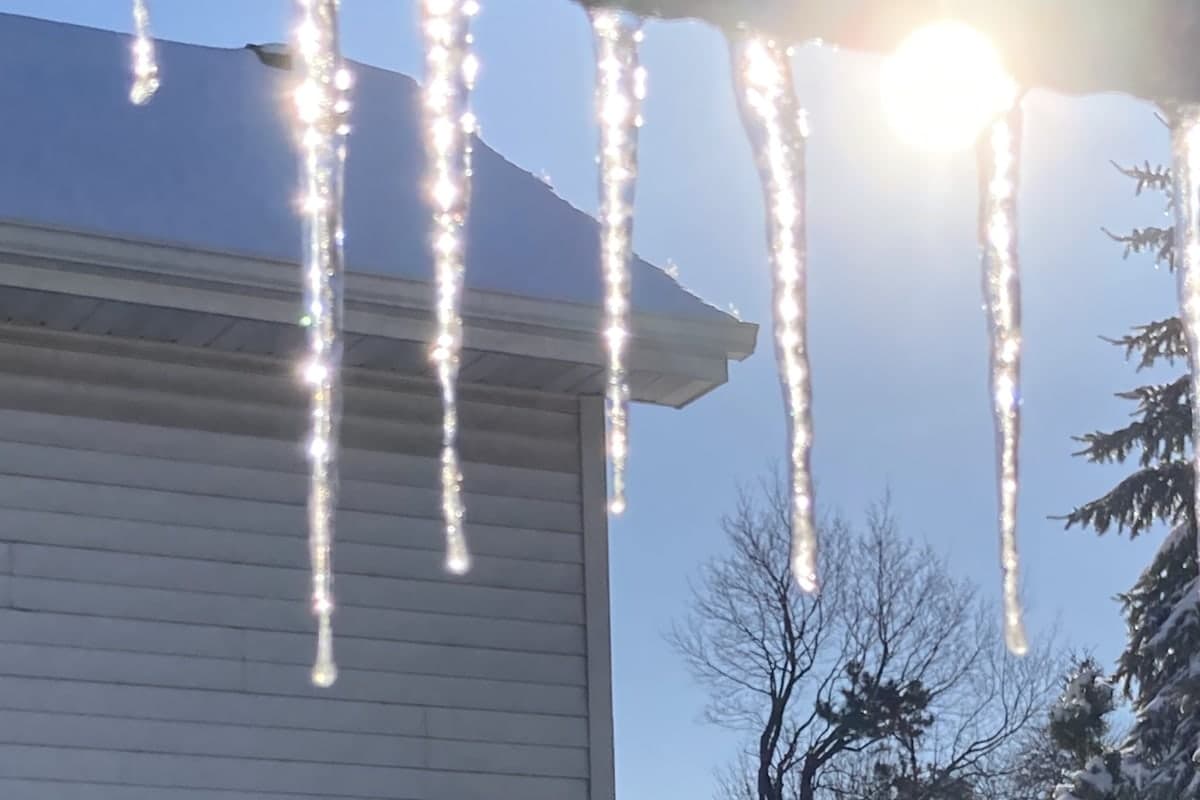
Why Do Ice Dams Form on Midwest Roofs?
Ice dams form when heat escaping from a home's living space warms the roof deck unevenly, melting snow near the ridge while the eaves stay below freezing. The meltwater refreezes at the cold eave, building an ice ridge that backs water up under the shingles. Midwest freeze-thaw cycles and lake-effect snow make the region prone to this pattern.
That backed-up water doesn't stay on the roof deck. It travels under the shingles, soaks the sheathing and attic insulation, and shows up weeks later as a stain on a ceiling or exterior wall. Water damage and freezing accounted for 27.6% of all homeowners insurance claims in 2022, with an average payout of $13,954 per claim between 2018 and 2022 (Insurance Information Institute, Facts + Statistics: Homeowners and Renters Insurance, retrieved 2026-08-01). Ice dam backup is one specific cause within that broader claim category, not a standalone figure of its own, but it's a real contributor to a very common claim type. This guide walks through why ice dams actually form, what stops them before winter, what to do if one has already built up, and where ice and water shield fits if you're already planning a roof replacement.
The heat-loss-and-refreeze cycle, step by step
The cycle runs in three stages. First, warm air from living spaces below rises into the attic through gaps around light fixtures, plumbing stacks, attic hatches, and under-insulated framing, warming the underside of the roof deck. Second, that warmth melts the bottom layer of snow sitting over the heated part of the roof, even while the air temperature outside stays below freezing. Third, the meltwater runs down the roof deck until it reaches the eave, which sits over the unheated overhang and stays cold, where it refreezes into ice. Each cycle adds another layer, and the growing ice dam eventually backs standing water up under the shingle courses above it.
Recessed can lights, bathroom exhaust fans that vent into the attic instead of outside, and an attic hatch without weatherstripping are three of the most common heat-loss points in older Midwest housing stock. None of them are visible from the roofline, which is part of why homeowners assume a roofing problem when the actual leak point is inside the house. A single bypass can be enough to keep one section of roof deck consistently warmer than the rest, which is why ice dams often reappear in the same spot on the same roof year after year until the underlying bypass is sealed.
Why it can start with very little snow
Ice dams don't require a major storm to get started. They can begin forming with as little as 2 inches of snow accumulation on a roof (DOE Building America Solution Center (PNNL), Attic Air Sealing, Insulating, and Ventilating for Ice Dam Prevention, retrieved 2026-08-01). That low threshold is why homes with a genuine attic heat-loss problem can develop dams several times in a single winter, not just after the season's biggest snowfall.
Why the Midwest's freeze-thaw swings make this worse than steady cold
Ice dams are typically prevalent in areas where ground snow load exceeds 60 pounds per square foot, and possible anywhere the load exceeds 30 pounds per square foot (DOE Building America Solution Center (PNNL), Construct Roofs and Attics for Ice Dam Prevention, retrieved 2026-08-01). Most Midwest snow load zones fall inside that range. What compounds the problem is the region's freeze-thaw pattern: a stretch of days above freezing followed by a hard refreeze repeats the melt-and-refreeze cycle over and over, instead of leaving snow to sit frozen and undisturbed the way it would in a steadily cold climate.
Is the Real Cause Your Roofing Material, or Your Attic?
Neither asphalt shingles nor metal panels prevent ice dams on their own, because the dam forms from heat escaping underneath the roof covering, not from the covering itself. The attic works as one connected system made up of air sealing, insulation, and ventilation, and a weakness in any one of those three lets warm air reach the roof deck.
Air sealing closes the gaps that let warm, moist household air rise into the attic in the first place, insulation slows the heat that does get through, and ventilation carries away whatever warmth remains before it can reach the roof deck. The DOE Building America Solution Center recommends R-60 insulation for vented attics in Climate Zone 5 and higher, a threshold that covers every Midwest target market (DOE Building America Solution Center (PNNL), Construct Roofs and Attics for Ice Dam Prevention, retrieved 2026-08-01). Ventilation has its own code requirement: balanced ventilation under IRC 2018 Section R806.2 calls for 40 to 50 percent of the net free vent area to sit in the upper portion of the attic or rafter space, so intake at the soffit is matched by real exhaust near the ridge rather than concentrated at one end. The same guidance recommends a 2-inch air gap between insulation and the roof sheathing, wider than the 1-inch minimum the code allows, because the extra clearance moves more air and carries heat away more effectively (same source).
If you assumed a material upgrade would fix this, compare how the two roofing types actually perform in a Midwest winter before spending on a replacement you don't need yet. See our breakdown of how metal and asphalt roofs handle Midwest winters differently for that comparison; it isn't the fix for an ice dam problem rooted in the attic.
How Can You Prevent Ice Dams Before Winter Hits?
Prevention means fixing the attic system before the first snow, not reacting once ice has already formed. Four measures make the biggest difference: air sealing and insulation upgrades, balanced soffit-to-ridge ventilation, correctly installed heating cables, and routine gutter maintenance.
Air sealing and insulation carry the most weight because they address the root cause: heat escaping into the attic. A professional attic insulation upgrade to R-49, the code minimum in many Midwest jurisdictions, typically runs $1,200 to $3,000 for a 1,000 square foot attic, while reaching the recommended R-60 runs $1,500 to $3,500 (InsulationRValues.com, Attic Insulation Cost: 2026 Prices by Material & R-Value, retrieved 2026-08-01). Balanced ventilation, following the 40 to 50 percent upper-vent ratio described above, prevents warm pockets of attic air from concentrating anywhere along the roof deck.
Heating cables are a supporting measure, not a substitute for insulation and ventilation work. IBHS specifies that cables must be UL Listed, FM Approved, or CSA Certified, and installed along the eaves, gutters, and downspouts, where they melt a channel that lets water drain instead of pooling and refreezing (IBHS, Ice Dams: Prevent Them and Your Roof Will Thank You, retrieved 2026-08-01). Professionally installed heating cables run $470 to $1,500. Finally, clear gutters and downspouts before the first freeze; a gutter packed with leaves or debris holds meltwater right at the eave, the exact spot where refreezing starts.
None of these four measures work well in isolation. A homeowner who installs heating cables but skips the attic insulation upgrade is treating the symptom at the eave while leaving the heat-loss source untouched, and will likely need the cables running most of the winter to keep pace with new ice. The most cost-effective sequence is usually air sealing first, since it's the cheapest of the four and addresses the root cause directly, followed by insulation, then ventilation corrections, with heating cables reserved for eaves and valleys that stay problematic even after the attic work is done.
What Should You Do If an Ice Dam Has Already Formed?
Start with the lowest-risk option and escalate only if it isn't enough. A roof rake used from the ground to clear snow above the dam, before more snow can melt and feed it, costs $50 to $100 and is the safest DIY step available (RoofingCalc.com, retrieved 2026-08-01). Calcium chloride or roof-melt tablets, laid in a pattern across the dam to open drainage channels, run $200 to $300 and are a reasonable next step for a homeowner comfortable on a ladder (HomeAdvisor, 2025). Rock salt should be avoided on roofing materials and gutters, which is why calcium chloride products marketed specifically for roofs are the safer choice.
Beyond that, hire a professional. Steam removal, which melts the ice without abrading the shingles underneath, runs $800 to $2,100 and is the method most roofers recommend for an established dam. High-pressure water removal runs $400 to $2,000. Physical chipping runs $800 to $1,500. Contractor labor for ice dam removal commonly runs $150 to $700 per hour with a two-hour minimum, which is part of why the national average for a full removal job lands around $1,200, with a typical range of $650 to $2,000 and up to $4,000 for large or complex jobs (HomeAdvisor, How Much Does Ice Dam Removal Cost in 2025?, retrieved 2026-08-01).
An active ice dam emergency is also a well-known trigger for door-to-door storm chasers offering same-day "free inspections" while ice is still visible on the roof. Read our guide to storm-chaser scams to watch for before letting anyone onto your roof in an emergency, and take the time to verify a roofer's license and insurance before hiring, even when the ice on your eaves makes waiting feel unbearable.
Does Ice and Water Shield Matter During a Roof Replacement?
Yes, and it's a code requirement in nearly every Midwest jurisdiction, not an optional upgrade. Under IRC Section R905.1.2, an ice barrier membrane must extend from the eave to a point not less than 24 inches inside the exterior wall line of the building, installed as either two cemented layers of underlayment or a single self-adhering polymer-modified bitumen sheet (up.codes, IRC ice barrier provision, retrieved 2026-08-01). That 24-inch buffer is sized to sit past the point where an interior wall meets the roofline, so that even if an ice dam forms above it, the backed-up water hits waterproof membrane instead of exposed sheathing. Exact code section numbers vary by state and local adoption, so check your specific jurisdiction's building code rather than assuming a single national citation applies everywhere.
If you're already planning a full roof replacement, ice and water shield is a detail your contractor should be pricing in as standard, not an add-on to negotiate separately. It doesn't change the broader economics of the project. For the full cost and return picture on a Midwest roof replacement, see our breakdown of the real return on a full roof replacement.
When Does Ice Dam Damage Mean You Need a New Roof, Not a Repair?
Most ice dam damage is repairable: replacing a section of compromised ice and water shield, fixing damaged shingles at the eave, and correcting the attic insulation or ventilation problem that caused the dam in the first place. What pushes a homeowner toward full replacement is usually the condition of the roof underneath the ice damage, not the ice dam itself.
Rather than repeat that full decision framework here, see our guide to the signs your roof needs full replacement and take our repair-vs-replace quiz if an ice dam has left you unsure whether what you're looking at is a patch job or the sign of a roof nearing the end of its life.
Frequently Asked Questions
- What actually causes ice dams? Is it my shingles?
- No. Ice dams are caused by uneven heat loss through the attic, not by the roofing material itself. Warm air escaping the living space heats the roof deck near the ridge, melting snow that refreezes into a ridge of ice at the colder eaves. The fix is air sealing, insulation, and ventilation working together, not a different shingle or metal roof (DOE Building America Solution Center, 2026).
- How much attic insulation do I need to stop ice dams in a cold climate?
- The DOE Building America Solution Center recommends R-60 insulation for vented attics in Climate Zone 5 and higher, which covers all Midwest states (DOE Building America Solution Center, 2026). A professional attic insulation upgrade to R-60 for a 1,000 square foot attic typically costs $1,500 to $3,500 (InsulationRValues.com, 2026).
- Will adding roof vents alone fix my ice dam problem?
- No. Building code calls for balanced ventilation, with 40 to 50 percent of the net free vent area placed in the upper portion of the attic or rafter space under IRC 2018 Section R806.2 (DOE Building America Solution Center, 2026). Ventilation is one leg of a three-part system with air sealing and insulation; vents alone cannot compensate for a poorly sealed or under-insulated attic floor.
- How much does professional ice dam removal cost?
- Professional ice dam removal averages around $1,200 per job nationally, with a typical range of $650 to $2,000 and up to $4,000 for large or complex jobs. Steam removal runs $800 to $2,100, physical chipping runs $800 to $1,500, high-pressure water removal runs $400 to $2,000, and salt or calcium chloride treatment runs $200 to $300 (HomeAdvisor, 2025).
- Do heating cables permanently get rid of ice dams?
- No. IBHS notes that heating cables create drainage channels through an ice dam, they do not remove the ice that has already formed (IBHS, 2026). Cables must be UL Listed, FM Approved, or CSA Certified and installed along the eaves, gutters, and downspouts before winter to help prevent buildup in the first place.
- Do I need ice and water shield if I'm getting a new roof?
- Yes, in nearly every Midwest jurisdiction. IRC Section R905.1.2 requires an ice barrier membrane extending from the eave to at least 24 inches inside the exterior wall line, using either two cemented layers of underlayment or a self-adhering polymer-modified bitumen sheet (up.codes, IRC ice barrier provision, 2026). For pricing and scope questions on a full replacement, see our guide to the [real return on a full roof replacement](/blog/roof-replacement-roi-midwest-2026).