Storm Chaser Contractors: How to Spot Them in the Midwest
Not every door-to-door contractor after a storm is a scammer—but all deserve scrutiny. Here's how to tell the difference and protect yourself fast.
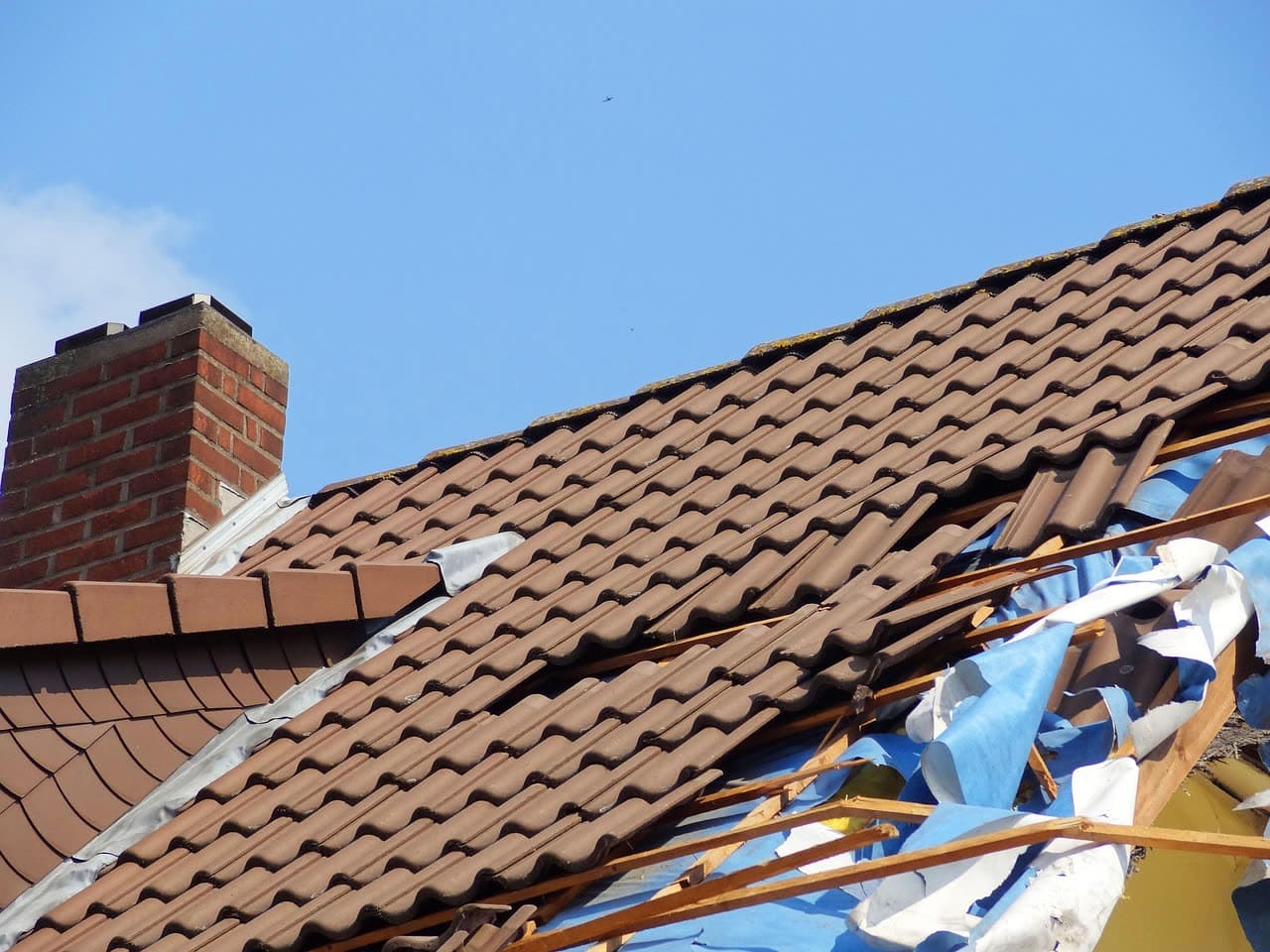
Storm Chaser Contractors: How They Find You After a Disaster (And How to Spot Them)
Not every contractor who knocks on your door after a storm is running a scam — some are legitimate roofers who work storm-affected markets. But the National Insurance Crime Bureau (NICB) reports that contractor fraud complaints increased 38% between 2023 and 2025, with storm-chasing operations driving the majority of those cases. Every uninvited post-storm solicitation deserves the same scrutiny, regardless of how professional it looks.
Key Takeaways
- Contractor fraud complaints rose 38% between 2023 and 2025, driven largely by storm-chasing operations (NICB, 2025).
- Every post-storm contractor can be verified in under ten minutes using free government databases — license lookup, Secretary of State entity search, and the BBB.
- Never sign an Assignment of Benefits (AOB) without consulting your insurer first — it surrenders your claim rights, and no Midwest state restricts it.
How Storm Chasers Operate: The Playbook
Storm chaser contractors run a business model built around speed, geography, and insurance systems. According to the NICB, upwards of $9.3 billion is lost annually to post-disaster contractor fraud, with storm-chasing crews accounting for a disproportionate share of roofing and siding claims.
When a significant hail event is forecast, crews stage in nearby cities. The moment the storm passes, they canvass affected neighborhoods — looking for hail strikes on shingles and dented gutters — and knock doors within 24 to 48 hours, before local contractors have heard from their existing customers. The pitch is standardized: a free inspection, an offer to handle insurance paperwork, urgency framing ("you need to file now"), and a contract signed on the spot that often includes an Assignment of Benefits clause.
Some crews complete work at a quality level designed to pass a quick adjuster inspection rather than last twenty years. Others take deposits and disappear. The NICB identifies manufactured roof damage, inflated mitigation claims, and AOB abuse as the most common fraud schemes in this category.
What distinguishes the worst operators: The door-knock scripts, insurance paperwork templates, and AOB agreements they carry are professionally produced. Sophisticated paperwork is not evidence of legitimacy — it is evidence of running the same scheme in multiple states.
5 Behaviors That Separate Storm Chasers from Legitimate Local Contractors
The BBB has documented that uninvited post-storm solicitation is the single most common setup behavior preceding roofing fraud complaints. The behaviors below do not automatically indicate fraud — but each narrows the odds that you are dealing with a contractor who will be accountable in six months.
1. They showed up without being called. Local contractors work through their existing pipeline after a storm. A crew knocking within 48 hours has no prior relationship with your neighborhood, no local permit history, and no neighbors who can vouch for their work. Not automatically a scammer — but no inherent accountability either.
2. They pressure you to sign today. The urgency is manufactured. Your insurance policy does not expire. There is no claim deadline that passes within 24 hours of an event. Any contractor who claims you must sign immediately is using a sales tactic, not sharing accurate information.
3. They offer to "handle everything" with your insurer. Helping with documentation is reasonable. Asking you to sign an AOB that gives them authority to negotiate your claim is not. A legitimate contractor submits an estimate and gets paid for the work — they do not need your claim rights transferred to them.
4. They cannot provide a verifiable local business address. Ask for a permanent business address — not a P.O. box or a truck number. Look it up in the state's Secretary of State entity search. If it does not exist or shows a vacant lot on Google Maps, that is a hard stop.
5. They ask for more than 30% upfront. The industry standard deposit is 10 to 25%, tied to material ordering. A demand for 50% or more — especially in cash — is a fraud signal. The contractor red flags that predict project abandonment almost always include an outsized initial payment.
The Assignment of Benefits Trap: What It Is and Why You Should Avoid It
An Assignment of Benefits (AOB) is a document that transfers your homeowner's insurance rights to a third party — in post-storm contexts, usually a roofing contractor. Once you sign, the contractor can file the claim, negotiate the settlement, and receive payment directly from your insurer. You lose the ability to dispute work scope or payment without potentially voiding the agreement.
The NAIC has identified AOB abuse as a major driver of inflated claim costs nationwide. Florida banned post-loss property AOB in 2023 after a documented fraud crisis. No Midwest state has enacted an equivalent restriction — Kansas, Nebraska, Missouri, Illinois, Ohio, Indiana, Minnesota, Iowa, and the Dakotas all lack specific statutes limiting post-loss AOB. Missouri compounds the risk by also lacking a state contractor licensing requirement.
The practical rule: do not sign any document from an uninvited post-storm contractor until you have called your insurer and spoken with your adjuster. An AOB is not required for a legitimate roofing claim to be paid. For a full breakdown of contractor paperwork, see how to read your contractor's contract.
Another Illegal Tactic: Waiving Your Insurance Deductible
Illinois, Minnesota, Wisconsin, Missouri, and Ohio all prohibit a contractor from waiving, absorbing, or rebating your insurance deductible to get you to sign. It is not a discount. It is insurance fraud, and a homeowner who goes along with it can share the liability.
The tactic has gotten more subtle than a flat offer to "cover your deductible." Some storm chasers instead inflate the scope of work on the insurance estimate by an amount that happens to match the deductible, then submit that padded claim to your insurer. The homeowner often does not notice the mismatch until the carrier flags it during claim review. If a contractor offers, in any form, to waive or absorb your deductible, treat it as a hard stop and consider reporting the offer to your state attorney general's consumer protection division.
How to Verify a Post-Storm Contractor in Under 10 Minutes
In 2025, 36 states officially supported NICB's Contractor Fraud Awareness Week. Every check below is free and uses government databases.
Step 1: License lookup. Search "[your state] contractor license lookup," go to the official licensing board site, and confirm the license is active and the name matches the business card. Missouri has no state-level contractor license — check the county or city licensing office.
Step 2: Secretary of State entity search. Confirm the company is registered and in good standing. The registered address must be a real physical location. A registration dated after the storm is a hard stop.
Step 3: Insurance certificate. Request a COI and call the issuing carrier directly to confirm the policy is active. Do not call the number on the certificate itself.
Step 4: Complaint history. Run the company name through your state AG's consumer protection database, bbb.org scam tracker, and nicb.org. See our full guide to government databases to check a contractor for license reciprocity and court records.
Step 5: Three local references. A contractor with multiple seasons in your market can name three jobs within 20 miles — call them. A crew that arrived last week cannot. See our complete contractor verification guide for the full workflow.
What to Do If You Already Signed With a Storm Chaser
Signing a contract does not mean you are trapped — but your window is narrow. Under the FTC's Cooling-Off Rule and equivalent state home solicitation laws, most Midwest states provide a minimum three-day right to cancel any contract signed at your home. This applies even if you signed the same day.
| State | Cancellation Window | Notes |
|---|---|---|
| Illinois | 3 business days | Home Repair and Remodeling Act covers contracts solicited at your home |
| Wisconsin | 3 business days | State consumer protection law; DATCP publishes storm-repair-specific guidance |
| Missouri | 3 business days | Applies to contracts solicited at the buyer's residence |
| Iowa | 3 business days | Door-to-door sales statute |
| Minnesota | 3 business days | Contractor must give written notice of your cancellation right at the time of signing |
Within three days: Write a cancellation notice stating you are exercising your right to cancel under applicable home solicitation contract law. Send it via certified mail with return receipt to the address on the contract. Do not accept verbal confirmation — written only.
Outside the window, work not yet started: Review the contract for a termination clause. A cancellation fee of 10 to 25% is often less than the cost of a failed project. Consult a construction attorney before paying — some cancellation fee clauses are unenforceable.
If work has begun or money has changed hands: Document everything — payments, communications, and photos of completed work. File simultaneous complaints with your state attorney general's consumer protection division, the BBB at bbb.org, the NICB at nicb.org, and the FTC at ReportFraud.ftc.gov. Attorney general offices in Missouri, Illinois, Ohio, and Minnesota have active construction fraud units that pursue repeat offenders.
Which Midwest States See the Most Storm Chaser Activity (and Why)
The Midwest sits at the intersection of tornado alley and the northern hail corridor. NOAA data show that large-hail days averaged 121 per season over the past two decades; in 2024, that number reached 133 — extending damaging hail into northern and eastern Midwest markets beyond the traditional corridor.
State-by-state risk profile:
- Kansas: Second-highest state for hail event frequency in 2024 with 250 recorded events. The I-70 corridor from Kansas City to Wichita is among the most consistently targeted post-storm markets nationally.
- Nebraska: Multiple EF3 tornadoes in 2024, including events near Lincoln and Omaha. High-value suburban damage concentrations attract out-of-state crews rapidly.
- Iowa: 125 tornadoes in 2024, a record year. Storm chaser activity concentrates in Des Moines, Cedar Rapids, and the Quad Cities after major outbreaks.
- Missouri: 182% increase in major hail events between 2022 and 2024. Missouri's lack of a state-level contractor licensing requirement makes it the easiest Midwest state for unlicensed crews to operate without detection.
- Minnesota: Minneapolis-St. Paul metro is struck by large hail events in late spring and early summer. High homeownership rates and home values make it a consistent target.
- Illinois: Third nationally in hail event frequency in 2024. The Chicago suburbs and downstate communities both attract post-storm canvassing.
- South Dakota: Lower population density but consistent storm chaser activity in the Sioux Falls metro after hail events.
Frequently Asked Questions
Are all door-to-door contractors after a storm scammers?
No. Some legitimate local roofers canvass after major storms. Fraudulent storm chasers use identical tactics, so treat every uninvited solicitation the same: verify license, insurance, and a physical business address before signing or paying.
What is a storm chaser contractor?
A transient crew, usually from out of state, that follows severe weather and targets neighborhoods with visible damage. Some are skilled roofers; others collect deposits and disappear. The defining characteristic is no established presence before the storm and no accountability after they leave.
What is an Assignment of Benefits and why should I avoid it?
An AOB transfers your insurance claim rights to the contractor, who then controls negotiations with your insurer. Most Midwest states have no AOB restrictions for property claims. Never sign one without calling your insurer first.
How quickly can I verify a contractor's license after a storm?
Under ten minutes using free tools: your state's contractor licensing board and Secretary of State entity search confirm whether the license is active, the name matches, and the business address is real.
What should I do if I already signed a contract with a storm chaser?
Check the contract for a cancellation clause. Most Midwest states require a three-day right to cancel home solicitation contracts — send written cancellation via certified mail within that window. If you've paid and the contractor is unresponsive, file complaints with your state AG, BBB, and NICB.
Which Midwest states are highest-risk for storm chaser activity?
Kansas, Nebraska, Iowa, Missouri, and Minnesota face the highest risk due to tornado alley and hail corridor exposure. Missouri saw a 182% increase in major hail events between 2022 and 2024. Iowa documented 125 tornadoes in 2024 alone.
The Bottom Line
A contractor at your door after a storm is not inherently a threat — but the circumstances of that knock remove the normal trust signals: no permit history in your county, no neighbors who can vouch for the work, no accountability to your community if something goes wrong.
The verification steps in this guide take ten minutes and are free. Your storm damage is real and warrants real repairs. The goal is not to freeze — it is to move on accurate information rather than manufactured urgency. Do not let a manufactured 24-hour deadline push you into skipping the checks that protect you.
For the full range of warning signs applicable to any contractor, not just storm chasers, start with contractor red flags — the seven behaviors that predict project failure regardless of how the contractor found you.
Sources: National Insurance Crime Bureau (NICB), "Contractor Fraud Costs Americans Billions Every Year," May 2024 and "NICB Warns Americans Contractor Fraud Continues to Rise Nationwide," 2025, nicb.org; NOAA National Centers for Environmental Information, Storm Events Database, ncei.noaa.gov; Insurance Information Institute, "Facts + Statistics: Hail," iii.org; Insurify, "Top 10 States Most Vulnerable to Hail Damage in 2026," insurify.com; Better Business Bureau, "BBB Tip: Protect yourself from storm chasers," bbb.org; NAIC, "Assignment of Benefits: Consumer Beware," content.naic.org; Iowa NWS Des Moines, "2024 Iowa Tornadoes," weather.gov/dmx; Illinois Attorney General, Consumer Protection Division, home repair fraud and insurance deductible waiver guidance, illinoisattorneygeneral.gov; Wisconsin Department of Agriculture, Trade and Consumer Protection (DATCP), storm chaser and home solicitation contract guidance, datcp.wi.gov.
Frequently Asked Questions
- Are all door-to-door contractors after a storm scammers?
- No. Some legitimate local roofers do canvass after major storms. The problem is that fraudulent storm chasers use identical tactics — door knocking, urgency pressure, and insurance paperwork offers. Treat every uninvited post-storm solicitation with the same scrutiny you would any cold approach: verify license, insurance, and physical business address before signing anything or handing over a deposit.
- What is a storm chaser contractor?
- A storm chaser contractor is a transient crew — usually from out of state — that follows severe weather events and targets neighborhoods with visible damage. Some are genuinely skilled roofers who move market-to-market. Others are fraud operations that collect deposits and perform substandard work or disappear entirely. The defining characteristic is that they have no established presence in your community before the storm and no accountability after they leave.
- What is an Assignment of Benefits and why should I avoid it?
- An Assignment of Benefits (AOB) is a document that transfers your insurance claim rights directly to the contractor. Once signed, the contractor — not you — controls negotiations with your insurer. This removes your ability to dispute the work scope or payment. Most Midwest states do not restrict AOB in property claims the way Florida does, meaning homeowners here have fewer legal protections if the arrangement goes wrong. Never sign an AOB without consulting your insurer or a licensed public adjuster first.
- How quickly can I verify a contractor's license after a storm?
- Most Midwest state contractor license lookups take under two minutes. Go to your state's contractor licensing board website, enter the company name or license number, and confirm the license is active, the name matches the business card, and there are no disciplinary actions. Then run the business name through your state's Secretary of State entity search to confirm it is registered. Combined, both searches take under ten minutes and are free.
- What should I do if I already signed a contract with a storm chaser?
- Review the contract immediately for a cancellation or rescission clause — most states require a minimum three-day right to cancel on home solicitation contracts. Send a written cancellation notice via certified mail to the contractor's registered address within that window. If you already paid a deposit and the contractor is unresponsive, file complaints with your state attorney general's consumer protection division, the BBB, and the NICB at nicb.org. If the loss exceeds small claims limits, consult a construction attorney.
- Which Midwest states are highest-risk for storm chaser activity?
- Kansas, Nebraska, Iowa, Missouri, and Minnesota face the highest storm chaser risk because they sit at the intersection of tornado alley and the northern hail corridor. Missouri recorded a 182% increase in major hail events between 2022 and 2024. Iowa documented 125 tornadoes in 2024 alone. Illinois and Ohio round out the risk profile as densely populated states with high-value housing stock that attract out-of-state crews after large regional storms.
- Is it illegal for a contractor to waive my insurance deductible?
- Yes, in most Midwest states. Illinois, Minnesota, Wisconsin, Missouri, and Ohio prohibit contractors from waiving, absorbing, or rebating a homeowner's insurance deductible as an inducement to sign a contract. The practice is treated as insurance fraud, and a homeowner who goes along with it can share in that liability. A contractor who offers to cover your deductible is a red flag, not a courtesy.