Grand Rapids Home Addition Permits: 2026 Guide
Which permits a Grand Rapids addition needs, what Wyoming, Kentwood & East GR require, realistic 2026 timelines, fees, zoning and historic-district rules.
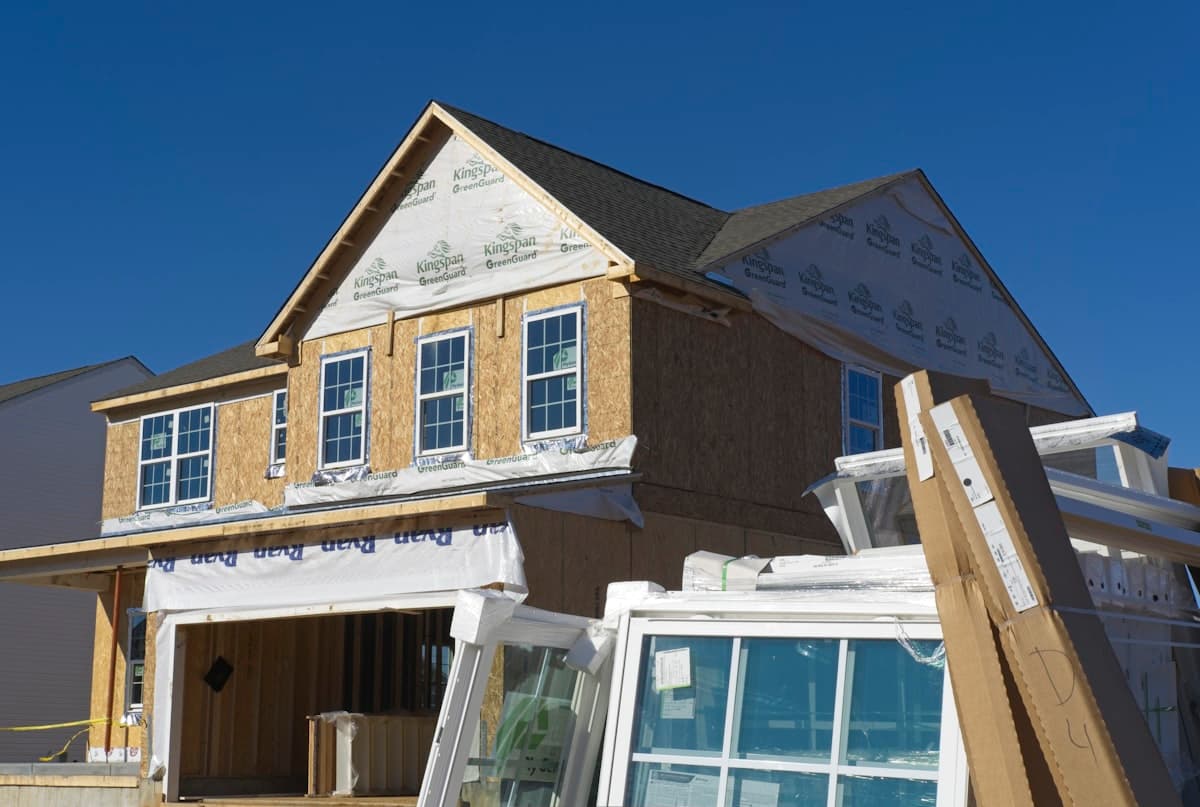
Planning a home addition in Grand Rapids, Michigan means dealing with permits before contractors, since the city or your specific suburb decides what you can build before a shovel goes in the ground. Almost every addition needs a building permit plus electrical, plumbing, and mechanical trade permits, and the issuing agency depends on your Kent County city.
Do You Need a Permit for a Home Addition in Grand Rapids?
Yes. Any addition that adds heated living space to a home inside Grand Rapids city limits requires a building permit from the City of Grand Rapids Development Center, plus separate electrical, plumbing, and mechanical trade permits in most cases. The city's own permit page states plainly that multiple permits are commonly required depending on the scope of the work.
Statewide, the baseline construction rules come from the Michigan Residential Code. The 2015 edition, built on the 2015 International Residential Code and effective February 8, 2016, is still the version in force: the state's planned 2021 update was paused by court order in July 2025 after a home-builder lawsuit, so the 2015 code remains current as of this writing (Marquette County, MI, Codes Currently Enforced, sourced from Michigan LARA's Bureau of Construction Codes; secondary: UpCodes, Michigan Residential Code 2015). That code sets the technical requirements your framing, insulation, egress, and structural details have to meet no matter which Kent County city issues your permit.
For an addition specifically, Grand Rapids requires the permit applicant to be either the owner-occupant of the home or a contractor holding a Michigan residential builder's license (or someone with written authorization from either) (City of Grand Rapids, New Residential Building or Addition Building Permit). Uploaded plans covering the property location, project size, and detailed specifications are required before plan review even starts, since review begins only once drawings are in the city's ePlan Room. If you'd rather skip the paperwork entirely, a verified Grand Rapids home addition contractor can pull permits as part of the job.
If you want the bigger-picture case for why permits exist and how Grand Rapids compares to other Midwest metros, our general Midwest permit primer covers that ground. This article stays specific to Grand Rapids and Kent County procedure.
Which City or Township Issues Your Permit? Kent County Jurisdiction Guide
The office that reviews your plans depends entirely on which Kent County city your address falls in. Kent County's own department directory lists no building-permit or code-compliance division (Kent County, MI, Departments & Offices); the job belongs to each city's own building department, or in a few cases, a third-party inspection agency the city has contracted the work out to.
| City | Who issues the permit | Notes |
|---|---|---|
| Grand Rapids (pop. 198,535) | City of Grand Rapids Development Center | Own department |
| Wyoming (pop. 77,353) | City of Wyoming Building Inspections | Own department |
| Kentwood (pop. 54,296) | City of Kentwood Inspections Department | Own department |
| East Grand Rapids (pop. 11,445) | Cascade Township Building Inspection Services | City handles zoning first, then forwards to Cascade Township |
| Walker (pop. 25,386) | City of Walker Building Department | Own in-house department, not contracted out |
| Grandville (pop. 16,356) | Professional Code Inspections (PCI), Jenison office | All building-related permits contracted out (PCI Jenison office) |
Population figures are 2024 estimates from each city's Data USA profile, linked above. Jurisdiction details link to each issuing agency's own page in the table above.
The practical takeaway: a homeowner in Wyoming, Kentwood, or Walker calls their own city hall and deals with in-house staff start to finish. A homeowner in East Grand Rapids or Grandville still applies through their city, but the plan review and inspections are actually run by Cascade Township or PCI, a distinction worth knowing before you assume your city's building department is who will show up to inspect your framing.
How Long Does Grand Rapids Home Addition Permitting Actually Take?
Expect roughly 8-12 weeks from initial application to final inspection sign-off for a typical Grand Rapids home addition, since the Development Center does not publish a full day-by-day breakdown. The one number the city does publish: initial zoning review acknowledgment lands within 1-2 business days of submission. Everything after that runs on typical municipal timelines rather than a posted schedule.
The stage that is verified: if your addition sits within 500 feet of a body of water or wetland, or otherwise triggers Land Use Development (LUDS) review, the city states that it acknowledges submissions within 1-2 business days (City of Grand Rapids, Land Use Permit). That is an intake acknowledgment, not a full approval.
Only the zoning/LUDS review number (dark blue bar) is a figure the Development Center has actually published. The other four stages are typical, conservatively estimated ranges, not official Development Center timelines. Plan review and rough-in inspections are the two stages most likely to stretch out, so submitting complete drawings up front and scheduling trade inspections early saves more time than anything else in the process.
If your address is in a locally designated historic district, add the Historic Preservation Commission's schedule on top of this: the Commission meets only once a month, on the first Wednesday, so missing a filing deadline can add up to roughly four weeks of pure waiting before your case is even heard (City of Grand Rapids, Historic Preservation Commission).
What Does a Grand Rapids Building Permit Cost?
Grand Rapids calculates building permit fees from your project's declared improvement value rather than a flat rate, billing the application fee, building permit fee, plan review fee, and zoning fee as separate line items. The city runs an online fee calculator so you can estimate costs before you apply (City of Grand Rapids, Building Permit Fees).
Improvement value for fee purposes includes construction, mechanical, electrical, plumbing, excavation, and grading labor and materials, but excludes architectural design fees, land cost, and landscaping. Because the calculator is the only accurate source (published fee schedules change and a single quoted dollar figure can go stale fast), plug your project's real construction value into the city's tool rather than relying on a number you saw elsewhere. For what the addition itself is likely to cost in total, not just the permit, see our Grand Rapids home addition cost guide, which breaks down pricing tiers separately from permit fees.
Do I Need to Worry About Zoning Setbacks and Lot Coverage?
Yes, and it needs to be checked before you finalize your design, not after. Grand Rapids' Zoning Ordinance sets district-specific setback and lot-coverage standards, and the Land Use Development permit process is how the city checks your addition against them. Exact setback and coverage limits vary by zoning district, so rather than designing to a number you found online, confirm your parcel's specific standards with the Development Center before your architect or contractor finalizes drawings. A design that clears review on the first pass avoids a costly redesign mid-project.
What If My Addition Is in a Historic District (Heritage Hill, Cherry Hill, Heartside)?
If your home is in Heritage Hill, Cherry Hill, or Heartside, three of Grand Rapids' six locally designated historic districts, any exterior work including an addition needs a Certificate of Appropriateness (COA) before your building permit can move forward. Heritage Hill is also individually listed on the National Register of Historic Places, but that federal listing is not what triggers the COA requirement; the city's local historic-district designation is (City of Grand Rapids, Historic Preservation Commission; Grand Rapids Magazine, "Building on History: Grand Rapids' Historic Preservation Commission"). Some projects are approved at staff level; others require a full hearing before the Historic Preservation Commission, which meets on the first Wednesday of each month. Applications have to be submitted ahead of a filing deadline tied to your chosen meeting date (City of Grand Rapids, Apply for a Certificate of Appropriateness); miss the cutoff and your case rolls to the following month. If you're weighing how large a scope makes sense given that added review step, our guide to bump-out additions versus full additions is a useful next read before you commit to a design.
Michigan Residential Builder Licensing: Who's Allowed to Pull the Permit?
Grand Rapids will only issue an addition permit to the owner-occupant of the home or to a contractor holding a Michigan residential builder's license, and which one applies changes who is legally on the hook if the work fails inspection.
Under Michigan law (MCL 339.2403(f)), anyone performing residential construction work is exempt from the residential builder or maintenance-and-alteration contractor license requirement only if the total contract price for labor, materials, and other items on the project is under $600 and the work is not part of a larger or major operation; the statute explicitly bars splitting one job into smaller contracts to dodge that threshold (Michigan Compiled Laws 339.2403).
In practice, virtually every home addition costs far more than $600, so any contractor you hire to do the work needs to hold a current Michigan residential builder license. This is also why Grand Rapids' own application requires the applicant to be either the owner-occupant or a licensed builder: the city holds whoever is the permit applicant of record responsible for code compliance and inspection sign-off. A homeowner who pulls their own permit but has an unlicensed contractor actually perform the work takes on that liability personally, even though someone else swung the hammer.
What Happens If You Build an Addition Without a Permit in Grand Rapids?
Skipping the permit process on a Grand Rapids home addition risks a stop-work order and a retroactive inspection that requires opening finished walls, and in serious cases, an order to bring the work up to current code or remove it entirely.
Michigan's Seller Disclosure Act requires a written disclosure statement, and that statutory form directly asks whether the property has had "structural modifications, alterations, or repairs made without necessary permits" (Michigan Compiled Laws 565.951 et seq., Seller Disclosure Act, disclosure statement text at MCL 565.957). An addition built without a permit falls inside that question, so known unpermitted work must be disclosed to a buyer at resale. Lenders and appraisers can also decline to finance or count unpermitted square footage toward a home's value.
None of this is a risk worth taking to save a few weeks of paperwork. Between the jurisdictional maze across Kent County's cities and the multi-stage review process, getting it right the first time is far cheaper than unwinding it later.
Next Steps for Your Grand Rapids Addition
Start by confirming which city or agency actually issues your permit, get your improvement value into the city's fee calculator, and if you're in Heritage Hill, Cherry Hill, or Heartside, build the Historic Preservation Commission's monthly schedule into your timeline from day one. From there, Above Board Pros can connect you with screened contractors across the Grand Rapids metro who handle permit pulls as part of the job, and our broader Michigan home improvement resources cover additions, remodels, and permitting across the rest of the state.
Frequently Asked Questions
- Which permits does a Grand Rapids home addition require?
- Most Grand Rapids additions need a building permit as the base requirement, plus separate electrical, plumbing, and mechanical trade permits depending on scope, and a Land Use Development permit if the site triggers zoning or environmental review. The City of Grand Rapids Development Center's own guidance says multiple permits are commonly required for a single project, not just one building permit covering everything.
- Who issues building permits for a home addition in Wyoming or Kentwood, Michigan?
- Wyoming, Kentwood, and Walker each run their own in-house building department and issue their own permits: City of Wyoming Building Inspections, the City of Kentwood Inspections Department, and the City of Walker Building Department. None of the three routes through Kent County, whose own department directory lists no building-permit or code-compliance division. East Grand Rapids and Grandville handle intake locally but forward building inspections to a third party, Cascade Township or Professional Code Inspections (PCI), respectively.
- How long does it take to get a home addition permit approved in Grand Rapids?
- The city's initial Land Use Development review acknowledges submissions within 1-2 business days, but that is only the zoning intake step, not the full permit. Plan review, permit issuance, and the inspection sequence add several more weeks on top of that, and neither figure is published as an official day-by-day count by the Development Center, so budget an estimated 8-12 weeks from application to final sign-off.
- How much does a Grand Rapids building permit cost for a home addition?
- Grand Rapids calculates building permit fees based on the improvement value of your project, with separate line items for the application, the building permit itself, plan review, and zoning review. The city publishes an online fee calculator rather than a flat rate, since costs scale with your addition's declared construction value.
- Do I need a Certificate of Appropriateness for an addition in Heritage Hill?
- Yes, if your home sits in a locally designated historic district such as Heritage Hill, Cherry Hill, or Heartside, exterior work including an addition needs a Certificate of Appropriateness before the building permit can proceed. Some projects clear at staff level, but others require a hearing before the Historic Preservation Commission, which meets only once a month.
- Can I pull my own building permit for a home addition in Michigan?
- Yes, if you are the owner and occupant of the home, Grand Rapids allows you to pull your own addition permit without a residential builder's license. Under Michigan law, anyone else performing the work on a project priced at $600 or more must hold a state residential builder's license, and splitting the job into smaller contracts to dodge that threshold is explicitly prohibited.
- What happens if I build a home addition in Grand Rapids without a permit?
- Unpermitted work can trigger a stop-work order and force you to open finished walls for a retroactive inspection before it can be signed off, or in serious cases, bring the work to current code or remove it. Michigan sellers are required to disclose known unpermitted work, and lenders or appraisers commonly decline to finance or value square footage that was never permitted.