Home Addition Cost in Grand Rapids 2026: Full Guide
Grand Rapids home additions cost $40,000-$175,000+ in 2026. Tier-by-tier pricing for Wyoming and East Grand Rapids, sunroom costs, and ROI data.
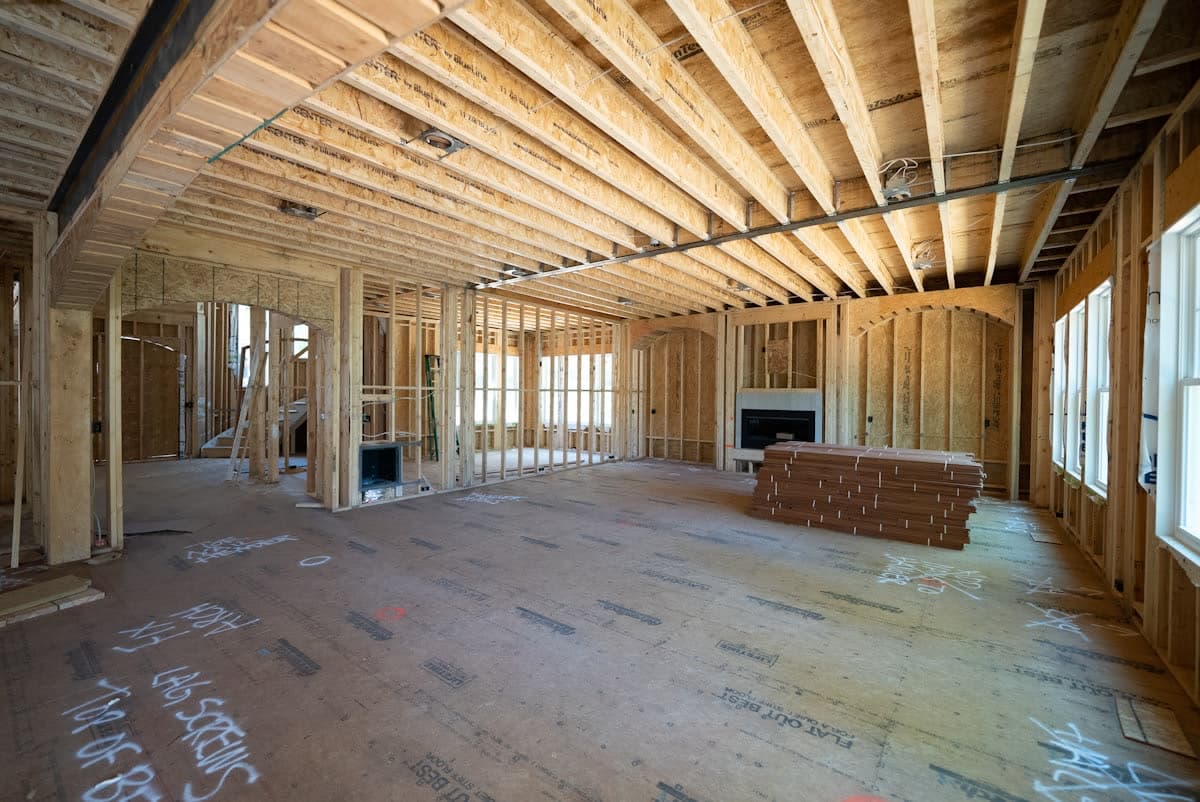
What Does a Home Addition Cost in Grand Rapids in 2026?
Most Grand Rapids, Michigan-area home additions cost between $40,000 and $175,000 or more in 2026, depending on size, whether the addition is single-story or two-story, and finish level. A small bump-out starts around $40,000, a mid-range addition runs $70,000 to $120,000, and second-story or master suite additions push past $150,000.
The Zonda, 2025 Cost vs. Value Report places a midrange primary suite addition in Grand Rapids, Michigan at $170,517, above both the national and East North Central regional averages.
Key Takeaways
- Grand Rapids home additions range from $40,000 (small bump-out) to $175,000+ (second-story or master suite) in 2026.
- A midrange primary suite addition averages $170,517 in Grand Rapids, above the $150,286 national and $160,572 East North Central regional averages (Zonda, 2025 Cost vs. Value Report).
- Sunroom additions run $25,000 to $85,000, with four-season rooms costing the most because they need full insulation and HVAC (HomeGuide, 2026).
- Michigan requires 42-inch minimum frost-depth footings for any addition with a new foundation, which pushes most projects to a spring-start, fall-finish schedule.
- Additions recoup roughly 32-34% of cost at resale in Grand Rapids, lower than kitchen or bathroom remodels, since the primary return is livable space, not resale value.
Homeowners in Wyoming, East Grand Rapids, Kentwood, and Grandville share a construction labor market with Grand Rapids proper, but permit rules, typical home age, and finish expectations vary enough by city to move the final number. This guide breaks the pricing down by tier, by square footage, and by the local factors that actually drive the bid you'll get.
What Are the Home Addition Cost Tiers in Grand Rapids?
Grand Rapids additions fall into four rough tiers based on size and scope. Most homeowners start around $40,000 for a small bump-out and the price climbs from there based on square footage, whether a second story is involved, and finish quality.
Bump-Out / Small Addition: $40,000-$70,000
A bump-out extends an existing room by a few feet, most commonly to expand a kitchen, dining nook, or bathroom without a full new room. These projects avoid a full foundation dig in many cases and keep roofline tie-in simple, which is why they land at the low end of Grand Rapids addition pricing, which starts around $40,000 for smaller projects according to local contractor data (Grand Rapids Contracting, 2026).
Mid-Range Full Addition: $70,000-$120,000
This tier covers a genuine new room, such as a family room, first-floor bedroom, or home office, with its own foundation, framing, roof tie-in, and finish work. National ground-floor addition costs run $80 to $200 per square foot, so a 500-600 square foot room lands squarely in this range once Michigan's foundation and permitting requirements are factored in (Angi, 2026).
Second-Story Addition: $100,000-$175,000+
Adding a full second floor over an existing footprint costs $100 to $300 per square foot on average nationally, reaching up to $500 per square foot for complex or high-end builds, with an average total project cost around $175,000 (Angi, 2026). Grand Rapids' older housing stock, much of it built before modern engineering standards, often needs structural reinforcement of the existing first floor before a second story can be added, which is the main reason this tier runs highest.
Master Suite / High-End Addition: $150,000+
A primary suite addition, bedroom plus bathroom, with premium finishes, is the closest match to a general home addition in the local Cost vs. Value data. Grand Rapids' midrange figure for this project type is $170,517, notably above the $150,286 national average and $160,572 regional East North Central average (Zonda, 2025 Cost vs. Value Report). High-end versions with custom finishes, vaulted ceilings, or a walk-in closet suite push well past $200,000.
How Much Does a Home Addition Cost Per Square Foot in Grand Rapids?
Home addition costs per square foot in Grand Rapids generally track the national range: $80-$200/sqft for ground-floor additions and $100-$300/sqft for second-story work, up to $500/sqft for complex builds (Angi, 2026). New construction in the metro runs $90-$450+/sqft depending on finish tier, averaging near $215/sqft, for comparison (Home Builder Digest, 2026).
Additions typically run at a premium over new construction on a per-square-foot basis because of demolition, tie-in work, and building around an existing structure rather than starting from a clear lot.
| Addition type | Cost per sq ft | Typical total (500-600 sqft) |
|---|---|---|
| Ground-floor addition | $80-$200/sqft | $40,000-$120,000 |
| Second-story addition | $100-$300/sqft (up to $500 high-end) | $50,000-$180,000+ |
| Sunroom (3-season) | $80-$230/sqft | $24,000-$69,000 |
| Sunroom (4-season, conditioned) | $200-$400/sqft | $60,000-$120,000 |
Sources: Angi, "How Much Does a Home Addition Cost?" (2026) and Angi, "How Much Does It Cost to Add a Second Story?" (2026), https://www.angi.com/articles/how-much-do-home-additions-cost.htm; HomeGuide, "How Much Does a Sunroom Cost?" (2026), https://homeguide.com/costs/sunroom-cost; Home Builder Digest, Grand Rapids new-construction cost data (2026), https://www.homebuilderdigest.com/cost-guides/how-much-does-it-cost-to-build-a-house-in-grand-rapids/.
How Do Costs Compare in Wyoming, MI and East Grand Rapids?
Construction costs per square foot are similar across Grand Rapids, Wyoming, and East Grand Rapids because the three cities draw from the same pool of licensed contractors and the same Michigan building code. What changes is typical project scope and finish level, which shifts the average total project cost rather than the underlying price per square foot.
Wyoming, Michigan (population 77,353, median household income roughly $73,700) sits directly southwest of Grand Rapids and shares its permitting norms with the broader metro. East Grand Rapids (population 11,445, median household income roughly $166,600) is a small, independent, higher-income municipality bordering Grand Rapids on the east side, easy to confuse with a Grand Rapids neighborhood since it shares part of the name (population and income figures: Data USA / U.S. Census Bureau, 2024, via the site's census dataset). East Grand Rapids homeowners more often choose the higher end of a given addition tier, custom cabinetry, premium windows, larger primary suites, which raises the average project total in that city without changing the underlying per-square-foot construction rate. Kentwood (population 54,296) and Grandville (population 16,356) both fall in the same MSA as Grand Rapids and East Grand Rapids and generally price in line with the metro's mid-range figures.
One important distinction: East Grand Rapids is administered by its own city government, separate from the City of Grand Rapids, with its own permitting office. Homeowners near the boundary line should confirm which jurisdiction covers their address before applying for a permit, since the process, fee schedule, and inspection timeline differ.
The chart below lines up median household income across the five cities side by side, since income (not the underlying construction rate) is what best explains the gap in typical project totals.
Median Household Income by Grand Rapids-Area City (2024)
Source: Data USA / U.S. Census Bureau, American Community Survey estimates (2024), via the site's pSEO census dataset. City profiles: Grand Rapids, Wyoming, Kentwood, Grandville, East Grand Rapids.
That income gap is the main reason a midrange primary suite addition in Grand Rapids averages $170,517, above both the $150,286 national and $160,572 East North Central regional averages (Zonda, 2025 Cost vs. Value Report). Michigan's licensing and inspection requirements add further overhead that lower-regulation states don't carry (see the permits section below).
What Does a Sunroom Addition Cost in Grand Rapids?
A sunroom addition in Grand Rapids typically costs $25,000 to $85,000, driven almost entirely by whether the room is conditioned for year-round use. Screened-in porch conversions run about $8,000 to $30,000 nationally, three-season rooms run $80-$230 per square foot, and four-season rooms run $200-$400 per square foot installed (HomeGuide, 2026).
Four-season rooms cost more because they're insulated and tied into the home's HVAC system rather than left as an unconditioned three-season space.
Sunroom interest is rising in the Grand Rapids market: homeowners are increasingly searching for sunroom pricing specifically rather than general additions, and it's easy to see why. A sunroom delivers more natural light and usable square footage at a lower cost than a full framed addition, since it typically uses lighter structural framing and often skips a full basement-depth foundation. The trade-off in West Michigan is thermal performance: a three-season sunroom will be uncomfortable from roughly November through March without supplemental heat, while a true four-season room costs closer to a standard addition once insulation, upgraded glazing, and HVAC extension are priced in.
If you're deciding between a sunroom and a full addition, run your numbers through our home addition cost estimator first. It's built for exactly this kind of side-by-side budgeting before you bring in a contractor for a formal quote.
What Local Factors Drive Home Addition Costs in West Michigan?
Three West Michigan-specific factors move addition costs beyond the national baseline: Michigan's frost-depth footing requirement, the state's contractor licensing system, and a short construction season that concentrates demand. Together they add administrative overhead and scheduling constraints that homeowners in lower-regulation, warmer-climate states simply don't face.
Michigan requires all exterior footings to extend a minimum of 42 inches below grade under the Michigan Residential Code (Mich. Admin. Code R. 408.30449). Most additions larger than a bump-out need a new foundation, and pouring footings that deep in frozen ground is either impossible or requires expensive extra site prep, which is why contractors push most Grand Rapids-area additions to a spring-start, fall-finish schedule.
Michigan also requires anyone performing residential construction work valued at $600 or more to hold a Residential Builder or Maintenance & Alteration Contractor license from the state Department of Licensing and Regulatory Affairs (LARA). Licensing requires 60 hours of pre-license education and a two-part exam administered through the state's licensing portal (Michigan LARA, 2026), a stronger consumer-protection floor than many neighboring states offer. Confirm the license number directly with LARA before signing.
Finally, the City of Grand Rapids requires the permit applicant to be the property owner-occupant, a licensed Residential Builder, or someone with written authorization from a license holder, and the permit's declared "value of improvements" must include building, mechanical, electrical, plumbing, excavating, and grading costs (City of Grand Rapids, 2026). Applications go through the city's Development Center at 1120 Monroe Ave. NW or its online portal.
What Is the ROI on a Home Addition in Grand Rapids?
A midrange primary suite addition in Grand Rapids recoups roughly 32% of its cost at resale, slightly below the East North Central regional average of 33.9% and the national average of 34.4% (Zonda, 2025 Cost vs. Value Report). A bathroom addition performs better on paper, recouping around 53.3% both regionally and locally.
That gap comes down to scope: a bathroom addition adds a functional room with less framing and roofing cost than a full bedroom suite, so a larger share of its budget shows up in resale value.
These numbers put home additions in a different category than a kitchen or minor bathroom remodel, which routinely recoup 50-80% in Midwest markets. That's expected: an addition's primary value is the square footage and lifestyle upgrade itself, not a dollar-for-dollar resale bump. For a broader look at how additions compare across Midwest metros and which project types perform best at resale, see our Midwest home addition ROI data.
How Do You Budget and Plan a Grand Rapids Home Addition?
Budgeting a Grand Rapids home addition comes down to five practical steps: pick your size and scope tier, confirm which city's permit office covers your address, verify your contractor holds a current Michigan license, plan your groundbreaking around frost-depth season, and set aside a contingency fund for the surprises older homes tend to reveal once walls open.
Use these steps as a working checklist:
- Set your tier. Decide whether you need a small bump-out, a full mid-range room, a second story, or a master suite, using the ranges above as your starting budget.
- Confirm your jurisdiction. Grand Rapids and East Grand Rapids run separate permit offices, so verify which one covers your address.
- Verify your contractor's license. Confirm Residential Builder or MAC licensing with LARA before signing.
- Plan around frost depth. A new foundation means a spring groundbreaking, so footing work isn't fighting frozen soil.
- Budget a contingency. Older Grand Rapids-area housing stock often reveals electrical, plumbing, or structural surprises once walls open. A 10-15% contingency is standard practice.
Run your project through the home addition cost estimator for a working number before your first contractor meeting. If you're bundling the addition with a kitchen bump-out, our Michigan kitchen remodel costs guide is useful too.
When you're ready to compare bids, Grand Rapids home addition services and home addition contractors in Wyoming, MI are both listed on Above Board Pros, along with the full Grand Rapids metro coverage page for homeowners in surrounding cities like Kentwood and Grandville.
Frequently Asked Questions
- How much does a home addition cost in Grand Rapids in 2026?
- Most Grand Rapids home additions run $40,000 to $175,000 or more in 2026. Small bump-outs start around $40,000, mid-range full additions land between $70,000 and $120,000, and second-story or master suite additions push past $150,000. A midrange primary suite addition (bedroom plus bathroom) averages $170,517 in Grand Rapids, above both the national average of $150,286 and the East North Central regional average of $160,572 (Zonda, 2025 Cost vs. Value Report).
- Is it cheaper to build a home addition in Wyoming, MI than Grand Rapids proper?
- Generally yes, though the gap is modest. Wyoming and Grand Rapids share the same labor market and most of the same licensed contractors, so per-square-foot construction costs track closely. The difference shows up in typical project scope and finish level: Wyoming's median household income (about $73,700) is closer to the metro norm, while pricier finish packages are more common in higher-income pockets of Grand Rapids and East Grand Rapids, which pushes their average project size up.
- What does a second-story addition cost in Grand Rapids?
- Second-story additions in Grand Rapids typically run $100,000 to $175,000 or more, reflecting the national range of roughly $100 to $300 per square foot on average (up to $500 per square foot for high-end or structurally complex builds). Costs run higher than a ground-floor addition because the existing structure needs engineering review, temporary roof removal, and reinforced framing to carry the new floor, on top of standard finish and MEP costs.
- How much does a sunroom addition cost in Grand Rapids?
- Sunroom additions in Grand Rapids generally run $25,000 to $85,000 depending on type. Screened-in porch conversions run about $8,000 to $30,000 nationally, three-season rooms run $80 to $230 per square foot, and four-season (fully conditioned) sunrooms run $200 to $400 per square foot installed, since they need insulation and HVAC extension to handle West Michigan winters (HomeGuide, 2026).
- Do I need a permit for a home addition in Grand Rapids?
- Yes. Any new addition in the City of Grand Rapids requires a building permit, and the application must come from the property owner-occupant, a Michigan-licensed Residential Builder, or someone with written authorization from a license holder. East Grand Rapids is a separate municipality with its own permitting office, so homeowners near the city line should confirm which jurisdiction their address falls under before applying.
- What is the ROI on a home addition in West Michigan?
- Home additions in Midwest markets typically recoup 32% to 34% of their cost at resale for a primary suite addition, based on the 2025 Cost vs. Value data for Grand Rapids. That is lower than kitchen or bathroom remodels, which is normal for additions: you are buying square footage and lifestyle value more than a resale bump. Bathroom additions recoup slightly more, around 53%, because they add a functional room without the full framing and roofing cost of a bedroom addition.