Siding Repair or Replace? Decision Guide (2026)
Torn between patching and replacing your siding? Learn the panel-matching, moisture, and insurance factors that decide it, plus real Midwest cost numbers.
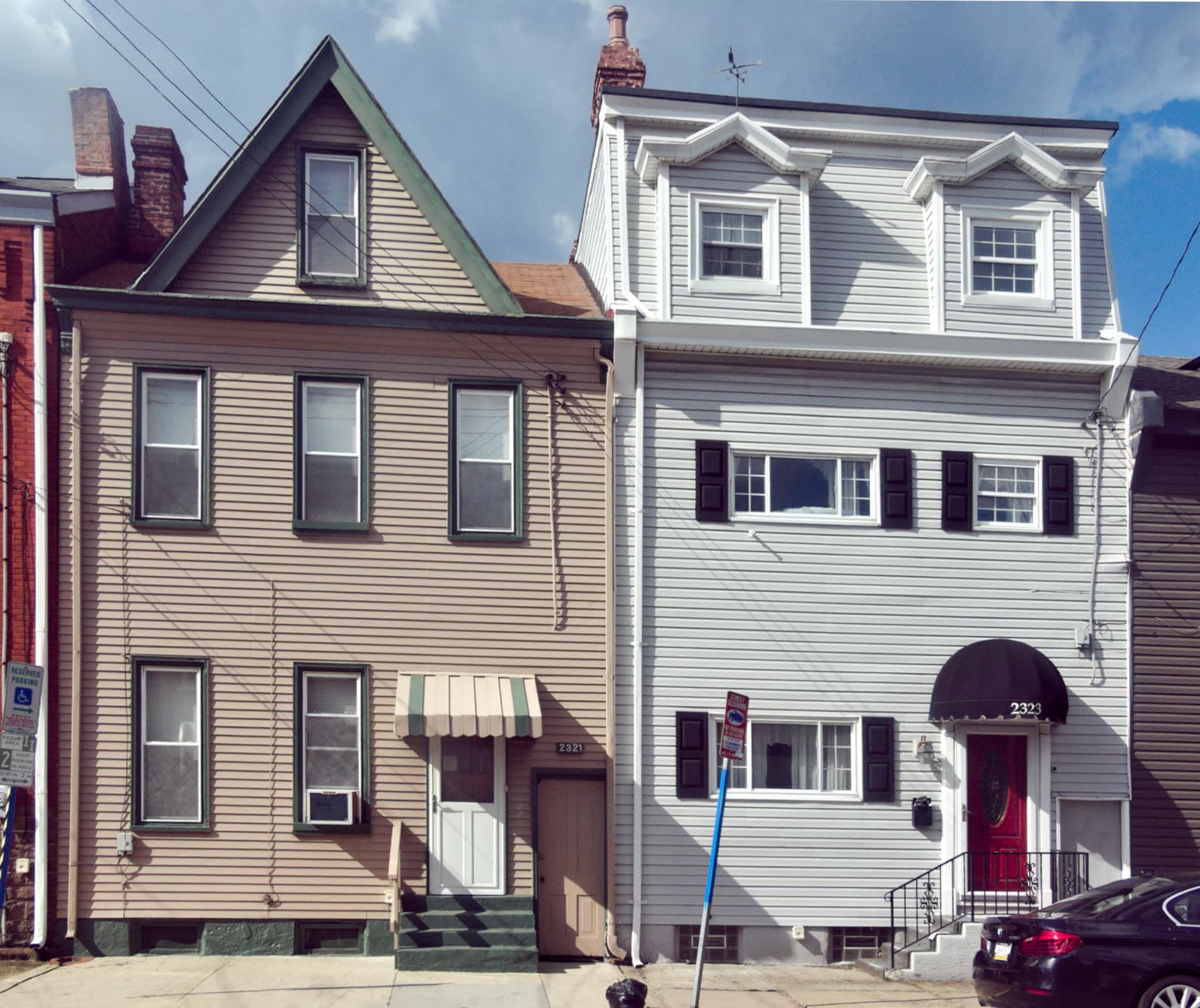
Siding Repair or Replace: What's the Real Difference?
The decision comes down to three factors, not how bad the damage looks: how much of the exterior is affected, whether the sheathing underneath is still dry and sound, and how old the siding already is. Any one of those three can force a replacement even when the other two favor repair.
Homeowners tend to start by staring at a cracked panel or a hail-dented section and asking "how bad does this look?" That is the wrong first question. A cracked panel on siding installed last year is a five-minute fix. The same crack on 18-year-old vinyl, next to a discontinued color, over sheathing that has never been inspected, is a different problem entirely.
Quick-reference: when repair makes sense vs. when replacement does
| Condition | Favors repair | Favors replacement |
|---|---|---|
| Damage extent | Under 25–30% of total surface | Over 25–30% of total surface |
| Siding age (vinyl) | Under ~15 years | 15+ years, especially with visible fading |
| Siding age (fiber cement) | Under ~20–25 years | 20–25+ years |
| Sheathing condition | Dry, firm, no staining | Soft spots, staining, or musty odors present |
| Panel/color availability | Current product line, recent install | Discontinued color or profile |
| Damage cause | Isolated impact, one elevation | Widespread hail, storm, or long-term moisture |
Should I Repair or Replace My Siding?
Start with the damage percentage, then weigh it against sheathing condition and siding age, since any one of those three can override the other two. Fifteen percent damage with rotted sheathing still means replacement, while thirty-five percent damage on a healthy, still-in-production siding line can remain a repair candidate if an exact match exists.
The 25-30% Rule Contractors Actually Use
Contractors commonly cite a 25 to 30% damage threshold as the point where repair stops being economical, the same range that tends to apply once cumulative repair spending starts approaching what a full replacement would cost outright (Leach Construction, "Should You Repair or Replace Your Siding? A Michigan Homeowner's Decision Guide," https://leachconstruction-mi.com/repair-or-replace-siding-michigan/). Age matters alongside the percentage: vinyl repairs generally make sense up to about 15 years old, fiber cement stays repairable into the 20 to 25 year range, and aluminum can often be patched past 30 years (same source).
Below that threshold, a contractor can isolate the damaged panels, source a reasonable match, and finish in a day or two. Above it, the labor of chasing matching material across a third of the house starts to cost nearly as much as tearing off and starting fresh, minus the benefit of a uniform, warrantied result.
Substrate condition overrides the percentage rule entirely. If the sheathing behind even a small damaged area shows soft spots or water staining, that is evidence of water intrusion extending well beyond what is visible on the surface, and it pushes the decision toward broader replacement regardless of how the panel-count math works out (Leach Construction, https://leachconstruction-mi.com/repair-or-replace-siding-michigan/).
Can You Patch Vinyl Siding and Have It Match?
Usually not, once siding has been up more than a few years. Vinyl fades unevenly under UV exposure, manufacturers discontinue colors and profiles, and even a matching color from a new production run can carry a visible dye-lot shift. The patch often looks newer than the surrounding wall, which draws more attention than the original damage.
Why Your 2012 Vinyl Can't Be Matched in 2026
Three things work against a clean vinyl patch. First, sun exposure fades vinyl at different rates by wall orientation, so a south wall and a north wall on the same house can already look slightly different before a new panel enters the mix. Second, manufacturers update color formulations and discontinue profiles on a rolling basis, so the exact product installed in 2012 may simply no longer exist in 2026. Third, even a "same" color ordered fresh can come from a different dye lot with a subtle but visible shift, and that new panel weathers on its own timeline, so a match achieved today can drift apart again within a year or two.
This is also the mechanism behind the insurance "line of sight" rule below: when an insurer cannot source a match, the standard remedy is replacing the entire visually continuous surface, not just the damaged panels, so the wall reads as one job (24/7 Restoration Specialists, "The Line of Sight Rule May Require Full Replacement," https://247restorationspecialists.com/matching-statutes-line-of-sight-siding-roof-claims/).
When Patching Still Makes Sense
Patching remains reasonable for small, low-visibility areas like a rear elevation, a section behind mature landscaping, or a spot near ground level; for siding still in production and only a few years old, where an exact match is genuinely available; and for isolated impact damage, such as a single panel cracked by a ladder, on an otherwise healthy wall. In each case, a minor color variance is a low-consequence trade-off for a repair costing a fraction of full replacement.
How Do You Know If Moisture Damage Means Replace, Not Repair?
Moisture damage means replace, not repair, once it reaches the wall sheathing instead of staying on the siding surface. Warning signs include soft or spongy spots when pressed with a screwdriver, dark staining on the sheathing, warped or buckling panels, and musty odors along exterior walls. Any of these should shift the conversation to a broader tear-off.
Three Signs the Sheathing Is Already Compromised
The clearest sign is a soft or spongy feel when the sheathing is pressed with a screwdriver; healthy sheathing feels firm, and give means the fibers have already broken down from sustained moisture (Boise Siding, "Siding Moisture Warning Signs," https://www.boisesiding.net/signs-your-siding-is-letting-moisture-into-your-home/). The second is visible dark staining on the sheathing once a section of siding is pulled back, pointing to water sitting against the wood rather than draining. The third is an interior symptom: peeling paint, stained drywall, or a musty smell along an exterior wall, suggesting moisture has reached the living space (Leach Construction, https://leachconstruction-mi.com/repair-or-replace-siding-michigan/).
When sheathing is soft or deteriorated in more than one area, replacement is the more cost-effective path. Patching over widespread moisture damage delays an inevitable replacement while the structure keeps degrading underneath the new panels, so the eventual repair bill only grows (Boise Siding, https://www.boisesiding.net/signs-your-siding-is-letting-moisture-into-your-home/). If your contractor pulls back a panel and finds any of these three signs, open up more of the wall for inspection before committing to a patch-only plan.
Is Repairing 30% of the Wall Cheaper Than Replacing the Whole House?
Not usually, once you factor in labor, matching headaches, and the risk of repeat repairs. A partial repair covering 20 to 30% of the exterior runs roughly $3,000 to $7,000, real savings against a $12,000-plus full replacement, but it comes with a shorter lifespan and no warranty reset for the rest of the house.
Takeaway: the cost gap between a partial wall repair and a full vinyl replacement is smaller than most homeowners assume, roughly $5,000 to $9,000, which is why the 25-30% damage threshold matters more than sticker price alone when deciding.
Nationally, full siding replacement runs $8,000 to $30,000 with an average around $19,000, and a standard 2,000-square-foot vinyl job runs about $12,252 for materials and installation combined (This Old House, "Siding Replacement Cost (2026 Pricing)," https://www.thisoldhouse.com/siding/siding-replacement-cost). Repair pricing runs per square foot, with vinyl repair costing $5 to $36 and simple crack or hole repair running $2 to $4; one contractor quoted by This Old House notes that once damage exceeds roughly half the siding area, replacement typically becomes the better financial decision (This Old House, "Siding Repair Cost: DIY vs. Professional (2026 Guide)," https://www.thisoldhouse.com/siding/siding-repair-cost).
For the material comparison behind these numbers, including why fiber cement costs more upfront but often ages more predictably, see our full vinyl vs. fiber cement siding comparison.
The Hidden Cost of Repeated Partial Repairs
The number that rarely makes a homeowner's spreadsheet is what happens after the first partial repair. If the underlying cause, age, sun exposure, or a flawed original install, keeps producing new damage, a $4,000 repair this year can become another $3,000 repair in two years, then a third patch later, each one matched against a wall that is now a patchwork of installation dates and fade levels. At that point the homeowner has often spent $8,000 to $12,000 across three repairs, close to a full vinyl replacement, without a uniform result or a fresh warranty. Our siding replacement ROI analysis for Midwest markets breaks down how full replacement's cost recoupment compares across the region.
Does Hail or Storm Damage Change the Repair-vs-Replace Math?
Yes, in two ways. Hail damage is often more widespread than it first appears, since impact can crack or loosen panels across an entire elevation, not just the spot that looks obviously dented. And in states with matching statutes, an insurer unable to source matching material can turn a partial claim into a full-wall or full-house replacement.
What Homeowner's Policies Typically Cover
As of July 2025, 16 states, including both Ohio and Iowa, have laws requiring insurers to use matching materials when repairing storm-damaged siding (Insurance.com, "Will Home Insurance Pay to Match Repairs to Undamaged Areas?," https://www.insurance.com/home-and-renters-insurance/coverage/how-to-get-full-replacement-repair-for-damages.html). To trigger the requirement, the homeowner or contractor generally has to show the damaged area cannot be visually matched, circling back to the panel-matching problem above. A separate matching endorsement, when available, typically costs around $25 a year and covers up to $20,000 for updating undamaged surfaces (Insurance.com, same source). When an insurer cannot source a match, the "line of sight" doctrine can require replacing the entire visually continuous surface, not just the damaged panels, so the repair reads as one job (24/7 Restoration Specialists, https://247restorationspecialists.com/matching-statutes-line-of-sight-siding-roof-claims/).
This matters more in some Midwest markets than others. Iowa ranks 8th nationally for hail risk, averaging 177 hail events and roughly $27.7 million in annual damages statewide, a meaningful factor for homeowners around Cedar Rapids (Trailstone Insurance, "Top 10 States Most at Risk for Hail Damage in 2025," https://trailstoneinsurance.com/blog/hail-damage-top-10-states-2025/). Ohio sees notably less hail activity, averaging roughly 117 events per year statewide since 1950 (Mapscaping, "Ohio Severe Storm Reports," citing NOAA/NWS Storm Events Database, https://mapscaping.com/ohio-storm-reports/), but the same 16-state matching statute still applies. Nationally, hail activity is rising: the U.S. recorded 5,432 hail events in 2025 versus 5,373 in 2024, and State Farm alone paid out more than $3.5 billion in hail claims in 2022 (Insurance Information Institute, "Facts + Statistics: Hail," https://www.iii.org/fact-statistic/facts-statistics-hail).
If your Cedar Rapids home takes hail damage, working with Cedar Rapids siding contractors who document damage thoroughly for the matching-statute claim process can be the difference between a spot repair payout and full coverage for a mismatched wall. Homeowners in Montgomery, Ohio, benefit from the same matching law even though local hail frequency is lower, and can compare siding pros in Montgomery, Ohio for both storm repair and full replacement quotes.
What Does Siding Repair Cost vs. Full Replacement in the Midwest?
Midwest siding costs generally track close to national figures, with some variation by material and market. In Cedar Rapids, Iowa, full vinyl replacement averages $20,422 and fiber cement averages $23,956, both above the national averages of $17,950 and $21,485 (Remodeling Magazine Cost vs. Value Report 2025, internal pSEO dataset). The West North Central regional average sits between the two.
The regional average lands at $18,907 for vinyl and $23,470 for fiber cement, a useful benchmark if your home falls outside the Cedar Rapids or Cincinnati metro areas covered below.
Cost recoupment at resale also varies by market. Cedar Rapids vinyl recoups about 63.8% of its cost at resale, and fiber cement recoups about 57.5%, both well below the national recoupment rates of 96.5% and 113.7% (same source). For a full breakdown of Iowa-specific pricing, see our Iowa siding replacement pricing guide.
Around Montgomery, Ohio, no dedicated local cost dataset exists for this small Cincinnati suburb, so the closest benchmarks are the Cincinnati metro and East North Central regional average: vinyl runs $18,274 in Cincinnati against a $19,139 regional average, and fiber cement runs $23,791 against $23,515 (Remodeling Magazine Cost vs. Value Report 2025, internal pSEO dataset). Montgomery does not require a permit for siding replacement that skips structural changes, a lighter lift than Cedar Rapids, which does require one (City of Montgomery, Ohio, "Projects Requiring a Permit," https://www.montgomeryohio.gov/required-permits/; City of Cedar Rapids, Building Services FAQs, https://www.cedar-rapids.org/local_government/departments_a_-_f/building_services/faqs.php).
Whichever side of the repair-vs-replace line your home falls on, see the full-project number before you call for bids. Run your numbers with our siding cost calculator for a realistic installed range, then lean on the decision framework above, damage percentage, sheathing condition, and siding age, to decide whether that number is needed this year or worth planning toward.
Above Board Pros connects homeowners with screened siding contractors across Midwest markets who can inspect sheathing condition on-site and give you an honest read on whether a patch will hold or a full tear-off is the smarter long-term move.
Interactive Tool
Siding Replacement Cost Calculator
Answer 3 questions to get a realistic installed cost range for your siding project.
1.How large is your home?
2.What siding material?
3.What is the existing siding situation?
Answer all 3 questions to see your estimate.
Frequently Asked Questions
- How do I know if I should repair or replace my siding?
- Repair is usually the right call when damage covers less than 25 to 30% of the total siding surface, the material is within its typical repair age (vinyl under about 15 years, fiber cement under 20 to 25 years), and the sheathing underneath is dry and solid. Once damage exceeds that range, or you find soft or stained sheathing, full replacement is almost always the more cost-effective path, even though the upfront number is bigger.
- Can vinyl siding be patched to match the existing color?
- Rarely, once the siding is more than a few years old. Vinyl fades unevenly from UV exposure, and manufacturers regularly discontinue colors and panel profiles, so a replacement panel bought today often will not match a wall installed even five to seven years ago. New panels also weather at a different rate than the surrounding siding, so the mismatch tends to worsen over the following year rather than blend in.
- Is moisture damage behind siding a sign I need to replace it?
- Yes, if the moisture has reached the wall sheathing. Warning signs include soft or spongy spots when you press the wall with a screwdriver, dark staining on the sheathing, warped or buckling panels, and musty odors inside along exterior walls. When sheathing is compromised in more than one area, patching the visible siding just seals moisture in and lets the structure keep degrading, so replacement is the more cost-effective choice.
- Does homeowners insurance cover siding repair or only full replacement?
- It depends on your state and whether your insurer can source a matching product. Sixteen states, including Ohio and Iowa, have matching statutes that require insurers to replace enough undamaged siding to create a uniform appearance when an exact match is not available. If your color or profile is discontinued, this line-of-sight rule can turn a partial repair claim into a full wall, or even full house, replacement claim.
- How much does it cost to repair siding vs. replace it in the Midwest?
- A small spot repair (one to three panels) typically runs $300 to $1,500, and repairing 20 to 30% of a home's exterior runs $3,000 to $7,000, both general contractor-quoted ranges. Full replacement on a roughly 2,000-square-foot home averages $12,252 for vinyl and runs $18,000 to $22,000 for fiber cement, before regional adjustments. In Cedar Rapids, Iowa, vinyl replacement averages $20,422 and fiber cement averages $23,956, both above the national averages.
- What percentage of damaged siding means I should replace instead of repair?
- Most contractors use 25 to 30% of total surface area as the tipping point. Below that threshold, and with sound sheathing underneath, a targeted repair is usually the more economical choice. Above it, the labor and material cost of chasing down matching panels across a third or more of the house typically exceeds, or comes close to, the cost of a full tear-off and replacement, without the discontinued-panel headache.
- How long does a siding repair last compared to a full replacement?
- A well-executed spot repair on sound sheathing can hold for the remaining life of the surrounding siding, often another 10 to 20 years for vinyl. But a repair does not reset the clock. If the original siding is already 15 to 20 years old, a patch is a short-term fix layered onto materials that are approaching the end of their service life, while full replacement resets the warranty and lifespan clock across the entire house.