Siding and Roofing Financing: What 0% Really Costs
0% siding and roofing financing isn't free. See real Midwest ticket sizes, deferred-interest traps, seasonal promo timing, and insurance-claim rules.
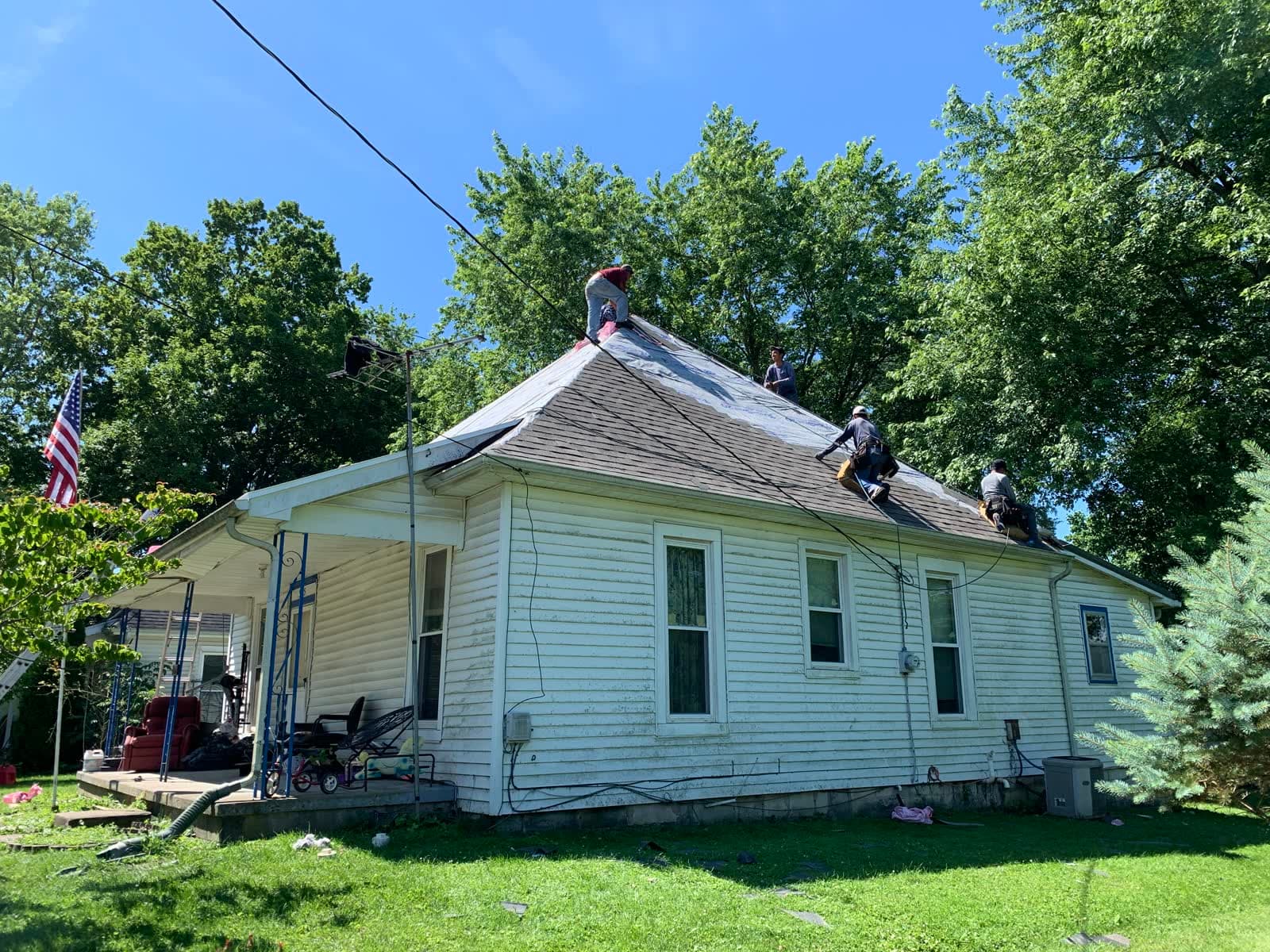
What Does 0% Siding or Roofing Financing Actually Cost?
For most homeowners, 0% siding or roofing financing costs nothing, as long as the full balance is paid before the promotional window closes. The catch: most of these offers are deferred-interest promotions, not true 0% APR loans, and missing the deadline triggers retroactive interest on the entire original balance (Consumer Financial Protection Bureau, CFPB deferred-interest explainer).
Miss even one payment cycle, and the lender calculates that retroactive charge from the original purchase date, not from the missed payment forward.
Our companion guide, contractor financing explained, covers the general mechanics of how these promotions work across all home improvement categories. This article focuses on what's different about siding and roofing specifically: bigger ticket sizes, heavier promo pressure, storm-driven urgency, and city-level context for four Midwest markets.
How Deferred Interest Differs From a True 0% APR Loan
A true 0% APR loan charges no interest for the stated term, period. If you miss a payment, you owe a late fee, not retroactive interest. A deferred-interest promotion looks identical on the sales floor but works completely differently in the fine print: the lender calculates interest on the original balance for every month of the promo period and only waives it if you clear the balance in full by the deadline. The CFPB has specifically flagged this structure for consumer confusion and has pushed retail credit issuers toward more transparent, true-0% alternatives (CFPB newsroom).
What Happens When the Promo Period Ends
If your balance isn't paid in full, or a payment lands more than 60 days late, most deferred-interest agreements retroactively apply the full interest rate (often 20% or higher) to the original purchase amount, calculated month by month across the whole promo term. On an $18,000 roof financed over an 18-month promo, that retroactive calculation can add thousands of dollars the day the promo lapses, not interest going forward from that point. Set a calendar reminder well before the deadline, and confirm your payoff amount in writing with the lender, not just the contractor.
How Much Do Homeowners Typically Finance for Siding and Roofing?
Siding and roofing sit at the high end of home improvement ticket sizes, so lenders and contractors compete hardest for this financing volume. Vinyl siding averages just under $18,000 and asphalt shingle roofing just under $32,000 in job cost, both well above the roughly $22,000 average across all project types (Zonda 2025 Cost vs. Value Report; CNBC Select).
Siding Financing: Typical Loan Amounts
Vinyl siding replacement nationally runs an average job cost of $17,950, and it happens to be the single highest-ROI midrange exterior project in the 2025 Cost vs. Value Report, recouping 96.5% of cost at resale (Zonda, 2025 Cost vs. Value Report). That combination, a large ticket with strong resale return, is a big part of why siding financing offers are so common: contractors and lenders both know the math tends to work in the homeowner's favor even before financing terms are considered.
Roofing Financing: Typical Loan Amounts
Roofing runs even larger. NerdWallet puts the national average roof replacement around $9,500, but that figure covers a wide range of roof sizes and materials, and can surpass $45,000 for premium materials or large homes (NerdWallet, Best Roof Financing Options in 2026). The Cost vs. Value dataset, which tracks a standardized 3,000-square-foot asphalt shingle tear-off and replacement, puts the national average considerably higher at $31,871, closer to what a typical Midwest single-family roof replacement actually costs once tear-off, decking repair, and disposal are included.
Roofing alone runs 45% above the average home improvement job, and a combined siding-and-roofing project more than doubles it, which is exactly why lenders and contractors push financing hardest on these two categories.
Why Exterior Projects Are the Most Heavily Promo-Financed Category
Three things stack up for siding and roofing specifically. Ticket size: both run well above the average home improvement project, so the dollars saved by a 0% promo are larger. Urgency: a failing roof or storm-damaged siding isn't optional the way a kitchen upgrade is. And there's effectively no DIY alternative at scale, which pushes nearly all demand through licensed contractors who compete on financing terms as much as price.
When Do Midwest Contractors Run the Best Siding and Roofing Promos?
Winter, from roughly December through February, is when Midwest siding and roofing contractors tend to offer their most aggressive financing terms, because cold weather slows installs and crews need work booked ahead of spring. Spring and fall carry the heaviest demand and the least financing urgency from the contractor's side.
Spring and Early Summer: Peak Season, Peak Competition
Once temperatures reliably clear 50°F, the minimum threshold for asphalt shingles to seal properly, roofing and siding crews across Toledo, Waukesha, Rockford, and Dubuque hit their busiest stretch (IKO, When is Roofing Season). Financing offers still exist in this window, but contractors have less need to discount rates when their calendars are already full.
Late Fall: Weatherization Urgency Financing
September and October bring a rush of homeowners racing to finish exterior work before winter. Demand is high and financing promos in this window tend to be standard rather than best-in-class, since contractors don't need extra incentive to book jobs.
Winter: Off-Season Rate Incentives
Once temperatures drop below the 50°F install threshold consistently, new project starts slow dramatically. This is the window where Midwest siding and roofing contractors are most likely to offer their strongest 0% promo terms, waived fees, or discounted rates, specifically to keep crews and sales pipelines active until spring. If your project isn't storm-driven or urgent, booking in the off-season, even with a spring install date, can mean a materially better financing offer.
How Does an Insurance Claim Affect Roofing Financing?
If your roof damage is from a covered event like hail or wind, financing should typically cover only your deductible, not the full job. Never accept a contractor's offer to waive or absorb your deductible: that's insurance fraud in at least 28 states, and it puts both you and the contractor at legal risk (Roofing Contractor magazine).
Financing Just the Deductible
Most homeowners insurance deductibles for wind or hail roof damage run a few hundred to a few thousand dollars, small enough that a short-term 0% promo on the deductible alone is usually easy to pay off in full. Illinois imposes a flat $500 to $1,000 deductible on roof claims, and Ohio sees regular tornado and hail claim activity that makes "we'll cover your deductible" pitches common there (Roofing Contractor magazine). Treat that offer as a hard red flag regardless of framing: it's illegal fraud, not a discount. Colorado has banned it by statute since 2012 under Senate Bill 38, a representative example of how seriously states treat it (Colorado Roofing Association).
When a Full Cash-Pay or Full-Finance Approach Makes More Sense Than a Claim
Filing a claim isn't automatically the right move. If your damage is minor and close to your deductible amount, or a claim would meaningfully raise your premium, paying cash or financing the full job outside of insurance can be the better long-term choice. Get a written estimate before deciding, and ask your insurance agent what a claim this size would do to your premium at renewal.
APR vs. Term: What Actually Determines Your Total Cost?
Financing cost comes down to two levers: interest rate and loan term, and they trade off against each other. A longer term lowers your monthly payment but raises total interest paid at the same rate. Our general financing mechanics guide and Midwest financing method comparison cover this tradeoff across loan types in more depth.
Worked Example: $18,000 Roof, 0% for 18 Months vs. a 5-Year Loan
Paying $1,000 a month clears an $18,000 balance on an 18-month 0% promo with zero interest, provided every payment and the final deadline are met. A tighter budget of $365 to $375 a month makes that payoff unrealistic, and a standard-rate 5-year term becomes the more honest option: standard installment-loan amortization puts a $20,000 balance at 12% APR over 5 years at about $445 a month and roughly $6,693 in total interest. Scaled to an $18,000 roof at a similar rate, the gap between the two paths runs to thousands of dollars, which is why the fine print matters more than the monthly payment.
Should You Finance or Pay Cash for Siding and Roofing?
Financing makes sense when it lets you address urgent damage without draining your emergency fund, or when you qualify for a true 0% or deferred-interest promo you can pay off in full. Cash wins when funds sit idle, the interest saved is trivial, or your credit profile would push financing rates high enough to erode the project's ROI.
When Financing Makes Sense
- Your roof or siding is failing now, and waiting risks further damage or higher repair costs.
- You qualify for a true 0% or well-structured deferred-interest promo and can realistically pay it off in the window.
- Paying cash would leave you without an emergency fund cushion.
When Cash on Hand Wins
- You have the funds available and the "opportunity cost" of using them (versus keeping them invested or in savings) is lower than the interest rate you'd pay to finance.
- Your credit tier would put you at a rate above roughly 10 to 12%, where interest costs start meaningfully cutting into the project's resale return.
- You're doing the project purely for near-term resale value. Our siding replacement ROI analysis for the Midwest breaks down how financing costs interact with the 96.5% cost-recouped figure for vinyl siding, since interest paid on a financed job effectively lowers your net return at sale.
What Do Siding and Roofing Financing Offers Look Like in Toledo, Waukesha, Rockford, and Dubuque?
Financed ticket sizes track local job costs closely, and job costs vary meaningfully across these four Midwest metros even for the same standardized siding or roofing scope. Below is what the Cost vs. Value data shows for each market, plus what that means for typical financing terms.
Toledo, OH
Toledo (population 267,463) sits directly in the Cost vs. Value dataset, with vinyl siding averaging $17,874 and asphalt shingle roofing averaging $31,521, both close to the national figures. Ohio's severe-weather corridor sees regular tornado and hail claim activity, which makes storm-driven roofing financing, and the deductible-waiver pitches that come with it, more common here than in calmer climates (Roofing Contractor magazine). Finance the deductible only, and verify any waiver offer against Ohio's fraud statutes before signing. For screened local pros, see Toledo siding contractors.
Waukesha, WI
Waukesha (population 71,233) doesn't appear in the Cost vs. Value dataset on its own; the nearest comparable market is Milwaukee, where vinyl siding averages $19,330 and roofing averages $31,184, both slightly above national figures (Milwaukee-metro benchmarks, not Waukesha-specific). Wisconsin's winters put the strongest financing-promo window in the December-to-February stretch described above. Compare quotes from Waukesha siding installers before committing.
Rockford, IL
Rockford (population 147,521) is a direct match in the dataset, with vinyl siding averaging $16,809 and roofing averaging $27,111, both below national averages, which typically means smaller financed balances for the same scope. Illinois sets a flat $500-to-$1,000 deductible on roof claims, which makes financing just the deductible a particularly clean, low-risk option here (Roofing Contractor magazine). Browse Rockford roofing contractors to compare local terms.
Dubuque, IA
Dubuque (population 59,174) isn't in the dataset directly; the nearest comparable market is Davenport, in the Quad Cities, where vinyl siding averages $20,422 and roofing averages $28,776 (Quad Cities-area benchmarks, not Dubuque-specific). Iowa's severe-weather corridor means storm-driven roofing claims are common here too, so the same deductible-only guidance applies. See Dubuque roofing contractors for local, screened options.
The Bottom Line
Siding and roofing financing can be genuinely free, but only under specific conditions: a true 0% APR structure, or a deferred-interest promo paid off completely and on time. Outside those conditions, you're paying real interest on some of the region's largest home improvement tickets, often $18,000 to $32,000.
Know whether your offer is deferred interest or true 0%, finance only your deductible on an insurance claim, watch for winter's better promo terms, and run the total-interest math, not just the monthly payment, before you sign.
Frequently Asked Questions
- Is 0% financing for siding or roofing actually free?
- Only if you pay the full balance before the promo period ends. Most contractor 0% offers are deferred-interest promotions, not true 0% APR loans. If any balance remains when the promo window closes, or a payment is more than 60 days late, interest is charged retroactively on the original balance from the date of purchase, calculated across the entire promo period (Consumer Financial Protection Bureau: https://www.consumerfinance.gov/ask-cfpb/i-got-a-credit-card-promising-no-interest-for-a-purchase-if-i-pay-in-full-within-12-months-how-does-this-work-en-40/). A missed deadline can turn a $15,000 siding job into a bill with a full year or more of back interest attached.
- What credit score do I need for siding or roofing financing?
- It depends on the lender. GreenSky does not publish a minimum credit score and evaluates each applicant individually (NerdWallet: https://www.nerdwallet.com/blog/loans/greensky-credit-home-improvement-loan). Hearth's 18-lender network works with FICO scores as low as 550 (Hearth: https://gethearth.com/product-features-financing/). Wisetack also publishes no hard minimum, weighing income and overall financial picture alongside credit score (Wisetack: https://www.wisetack.com/consumers). Rates generally improve as your score moves from fair into good credit territory.
- Can I finance just my insurance deductible for a roof replacement?
- Yes, and for most homeowners that is the more defensible use of financing on an insurance claim: finance the deductible portion (often $500 to $2,500) rather than the full job. Never accept a contractor's offer to waive or absorb your deductible entirely. That practice is insurance fraud in at least 28 states, codified explicitly in states like Colorado, and roofers who pitch it are a red flag regardless of where you live (Roofing Contractor magazine: https://www.roofingcontractor.com/articles/96392-homeowners-struggle-to-pay-insurance-deductibles; Colorado Roofing Association: https://www.coloradoroofing.org/news/waiving-insurance-deductibles-is-illegal-in-colorado).
- How much does it cost to finance a $15,000 siding job?
- On a true 0% promo paid off within the window, it costs nothing beyond the purchase price. On a standard installment loan, a $15,000 balance at a mid-tier rate around 10 to 12% APR over 5 years runs roughly $320 to $335 a month and $4,000 to $5,000 in total interest by payoff, based on standard installment-loan amortization math. Shorter terms or higher credit tiers bring that interest total down significantly.
- What time of year has the best siding and roofing financing deals in the Midwest?
- Winter, from roughly December through February, when cold-weather install limits (asphalt shingles need temperatures above 50°F to seal properly) slow contractor demand and crews need work booked ahead of spring. Contractors in Toledo, Waukesha, Rockford, and Dubuque often run their most aggressive financing incentives in this window specifically to fill the schedule (IKO: https://www.iko.com/na/blog/when-is-roofing-season/). Late summer and early fall carry the least financing urgency because that is when homeowner demand is naturally highest.
- Is it better to use a HELOC or contractor financing for a new roof?
- A HELOC typically carries a lower ongoing rate and larger available limit, which suits homeowners with substantial equity tackling a large or bundled exterior project. Contractor financing is faster to approve, doesn't touch your home equity, and can be genuinely free if you qualify for and pay off a true 0% promo in full. Our guide to contractor financing mechanics and our Midwest financing-method comparison both walk through this tradeoff in more detail.