Storm Chaser Contractor Scams: Midwest Homeowner's Guide
Storm chaser contractor scams hit Midwest homeowners after hail. Learn 8 warning signs and how to find a verified local roofer before you sign anything.

Storm Chaser Contractor Scams: Midwest Homeowner's Guide
After a major hailstorm tears through your neighborhood, you want your roof fixed fast. That urgency is exactly what storm chaser contractor scams exploit. Every year, thousands of Midwest homeowners fall victim to these schemes, signing contracts they regret, paying deposits that vanish, and ending up with roofs that fail inspection months later.
This guide tells you what to watch for, what your legal rights are, and how to find a contractor you can actually trust.
Key Takeaways
- Hail causes over $22 billion in insured losses annually in the U.S., making Midwest states prime targets for opportunistic contractors (NAIC, 2024)
- Eight specific warning signs identify a storm chaser before you sign anything
- Waiving your insurance deductible is illegal in Illinois, Minnesota, Wisconsin, Missouri, and Ohio
- Most Midwest states give you 3 business days to cancel a home-solicited contract
- Verified local roofers can be found through government-database-checked platforms
Learn more about how to hire a home improvement contractor in the Midwest before you open the door to a post-storm solicitor.
What Is a Storm Chaser Contractor?
Storm chaser contractors are out-of-area roofers who follow severe weather the way ambulance chasers follow accidents. The NAIC estimates hail causes more than $22 billion in insured losses each year in the U.S., with Missouri, Illinois, and Wisconsin consistently among the top-affected Midwest states (NAIC, 2024). That volume of insurance money draws opportunists from across the country within 24 to 48 hours of every significant storm.
These contractors are not necessarily unlicensed in their home state. The problem is they have no local accountability. They operate on volume, moving from storm event to storm event and signing as many contracts as possible before neighbors and local media catch on. When the work is shoddy or the deposit clears and they leave, there is no local office to visit and no local bond to file a claim against.
In our experience reviewing contractor complaints filed with Midwest state attorneys general, storm chaser disputes cluster almost entirely in the 30 to 90 day window after a named weather event. The geographic concentration is striking: a single hailstorm in the St. Louis metro can generate dozens of complaints against the same contractor over a single week.

Why Does the Midwest Attract Storm Chaser Contractors?
The Midwest is not just occasionally hit by severe hail. It sits in what meteorologists call the hail corridor, where warm Gulf moisture meets cold Canadian air, producing some of the highest annual hail frequency rates in the country. Missouri, Illinois, Wisconsin, Iowa, Kansas, and Nebraska all rank in the top tier for hail event frequency, according to NOAA's Severe Storms Laboratory. Multiple significant hail events per year are the norm in this region, not the exception.
That frequency creates a predictable pipeline for storm chasers. They monitor radar, track National Weather Service damage reports, and deploy crews within days of each event. Local roofing companies, by contrast, are already backed up with existing customers and referrals. Storm chasers fill a perceived gap, and homeowners under time pressure accept the first confident contractor who knocks on their door.
What makes the Midwest especially attractive is the combination of high storm frequency and high homeownership rates. The region's homeownership rate consistently runs above 70 percent, compared to the national average of 65.7 percent (U.S. Census Bureau, 2024). More homeowners with damaged property and a ticking insurance clock means more targets per storm event.
Citation Capsule: The Midwest hail corridor, covering MO, IL, WI, IA, KS, and NE, experiences multiple major hail events annually. NOAA's Severe Storms Laboratory confirms this region's elevated severe weather frequency as among the highest in the country. Combined with homeownership rates above 70 percent (U.S. Census Bureau, 2024), compared to the national average of 65.7 percent, the Midwest represents the highest-density target geography for storm chaser contractor activity in the country. For Midwest homeowners, this means storm chaser activity is not a rare occurrence tied to a single catastrophic event - it is a recurring seasonal risk that arrives with every major hail cell. Knowing this in advance is the first step toward not being caught unprepared when a solicitor appears at the door within 48 hours of a weather event.
How Do I Spot a Storm Chaser Contractor?
Recognizing a storm chaser contractor scam takes about 60 seconds if you know what to look for. The Wisconsin Department of Agriculture, Trade and Consumer Protection reports that post-storm door solicitation is the single most common precursor to contractor fraud complaints in the state. None of these signs alone is automatically disqualifying, but two or more together should stop the conversation before you sign anything.
1. Unsolicited Door-Knocking After the Storm
Legitimate local roofers do not need to knock on doors after a storm. They have referrals, existing customer relationships, and a full schedule. If a contractor appeared at your door within 24 to 72 hours of a weather event specifically because of the storm, treat that as the first warning sign. The Wisconsin DATCP explicitly flags post-storm door solicitation as the primary storm chaser indicator in its consumer guidance.
2. Out-of-State Plates or No Local Address
Look at the truck in your driveway. Out-of-state license plates are not automatically disqualifying, but combined with no verifiable local business address, they signal a company operating without local roots. Ask for a physical business address and look it up on Google Maps. A mailbox store or a blank map result is a clear warning that this company has no local presence.
3. Pressure to Sign Immediately or a Fake Insurance Deadline
Storm chasers manufacture urgency. "This deal is only good today." "Your insurance adjuster is coming tomorrow and we need to start now." "If you don't sign before the deadline, your claim could be denied." None of these statements reflect how homeowners insurance actually works. There is no contractor-imposed insurance deadline. A legitimate contractor will give you time to verify their credentials before you commit.
4. Offer to Waive Your Insurance Deductible
This is not just a warning sign. It is illegal. Illinois, Minnesota, Wisconsin, Missouri, and Ohio all prohibit contractors from waiving, absorbing, or rebating a homeowner's insurance deductible as an inducement to do business. The Illinois Attorney General's Consumer Protection Division specifically warns homeowners about this practice. If a contractor offers to "cover your deductible," walk away and consider reporting them to your state AG.
The deductible waiver scam has evolved. Some storm chasers no longer say "we'll waive your deductible" outright. Instead, they inflate the scope of work on the insurance estimate to cover the deductible amount, then submit the inflated claim to your insurer. This exposes the homeowner, not just the contractor, to insurance fraud liability.
5. Assignment of Benefits (AOB) Request
An Assignment of Benefits agreement transfers your insurance claim rights directly to the contractor. The contractor then negotiates with your insurer, often inflating claims, and you lose control of the settlement. The AARP Fraud Watch Network identifies AOB requests as one of the fastest-growing storm-related fraud tactics targeting homeowners over 50. Do not sign any document containing "assignment of benefits" language before consulting your insurer.
6. No Verifiable Physical Business Address
Search the company name on Google Maps. Call the number and ask for the physical office address. If they give you a P.O. box, a residential address, or an address that does not match a real roofing business, that is a problem. Local contractors have shops, warehouses, or at minimum a verifiable commercial address where you could show up in person if something goes wrong.
7. Cannot Provide a Local License Number
Roofing license requirements vary by state in the Midwest. Illinois and Wisconsin both require registration or licensing for residential contractors. Iowa requires contractor registration. Ask directly: "What is your state contractor license number, and what state issued it?" Then verify that number through the state's public database. Learn how contractor verification through government databases works before you hire anyone.
8. Requests a Large Deposit Before Any Work Begins
A reasonable deposit for a roofing job is typically 10 to 30 percent, paid once materials are ordered. A storm chaser who asks for 50 percent or more upfront, especially before insurance approval, is collecting money with minimal accountability. The Illinois AG's home repair fraud guidance recommends never paying more than one-third of the total contract price before work begins.
Citation Capsule: The Illinois Attorney General and Wisconsin DATCP both publish explicit guidance on storm chaser warning signs. Eight indicators consistently appear in fraud complaints: unsolicited door-knocking, out-of-state plates, pressure to sign same-day, deductible waiver offers, AOB requests, no verifiable address, missing license numbers, and large upfront deposits. Two or more of these signs together represent a high-risk contractor situation. For Midwest homeowners, the practical implication is clear: each sign individually may have an innocent explanation, but the combination is the signal. A contractor who knocked on your door unsolicited AND cannot produce a local license number AND asks for 50 percent upfront has cleared three red flags simultaneously. That is not a coincidence - that is a pattern. State AG offices in Illinois and Wisconsin both recommend consumers document these interactions and report them even before signing anything, because early complaints help investigators track fraud before it spreads across a storm-affected community.

What Happens If You've Already Signed a Storm Chaser Contract?
Do not panic. You likely still have time to cancel under federal and state consumer protection law. Under the FTC's Cooling-Off Rule, contracts signed at your home for $25 or more can be canceled within 3 business days. Most Midwest states match or exceed this federal protection with their own parallel statutes.
State-by-state right of rescission overview:
| State | Cancellation Window | Notes |
|---|---|---|
| Illinois | 3 business days | Home Repair and Remodeling Act; applies to all home solicitation contracts |
| Wisconsin | 3 business days | State consumer protection law; DATCP publishes specific guidance for storm repair contracts |
| Missouri | 3 business days | Applies to contracts solicited at the buyer's residence |
| Iowa | 3 business days | Applies to door-to-door sales under state consumer protection statute |
| Minnesota | 3 business days | Contractor is required by law to provide written notice of your cancellation rights at time of signing |
To cancel, send written notice by certified mail to the address listed on the contract. Keep the return receipt. Act on the date you signed, not from today, so move immediately if that window is still open.
If the 3-day window has closed or work has already started, your options are more limited but not exhausted. Photograph your roof in its current state. Preserve every written communication, text message, and payment record. File a formal complaint with your state attorney general's consumer protection division. If you paid by credit card, contact your card issuer about a chargeback. If materials were delivered or work has begun, consult a construction attorney before taking further steps to avoid inadvertently waiving additional rights.
Citation Capsule: Under the FTC Cooling-Off Rule and parallel state statutes in IL, WI, MO, IA, and MN, homeowners who sign a home improvement contract at their residence retain a 3 business day right of rescission. Written cancellation sent by certified mail to the contract address is the legally required method in all five states. The clock starts on the date of signing, not the date you decide to cancel, so acting on day one is critical. Storm chasers frequently obscure or omit the legally required cancellation notice from the contract documents they present at the door, which is itself a violation of FTC rules. Homeowners who discover the notice was missing have additional grounds for complaint beyond the underlying fraud. Filing with your state AG and the FTC simultaneously creates a federal record that investigators can use to track contractors operating across multiple states - which is exactly how storm chasers operate.
How Do I Find a Verified Local Roofer Instead?
The antidote to storm chaser contractor scams is verification before you sign. A legitimate local roofer can prove their credentials in under five minutes, and any contractor who refuses or delays that proof is signaling a problem. Most homeowners skip the license check before signing a repair contract — which is the primary reason storm chasers continue to find willing customers.
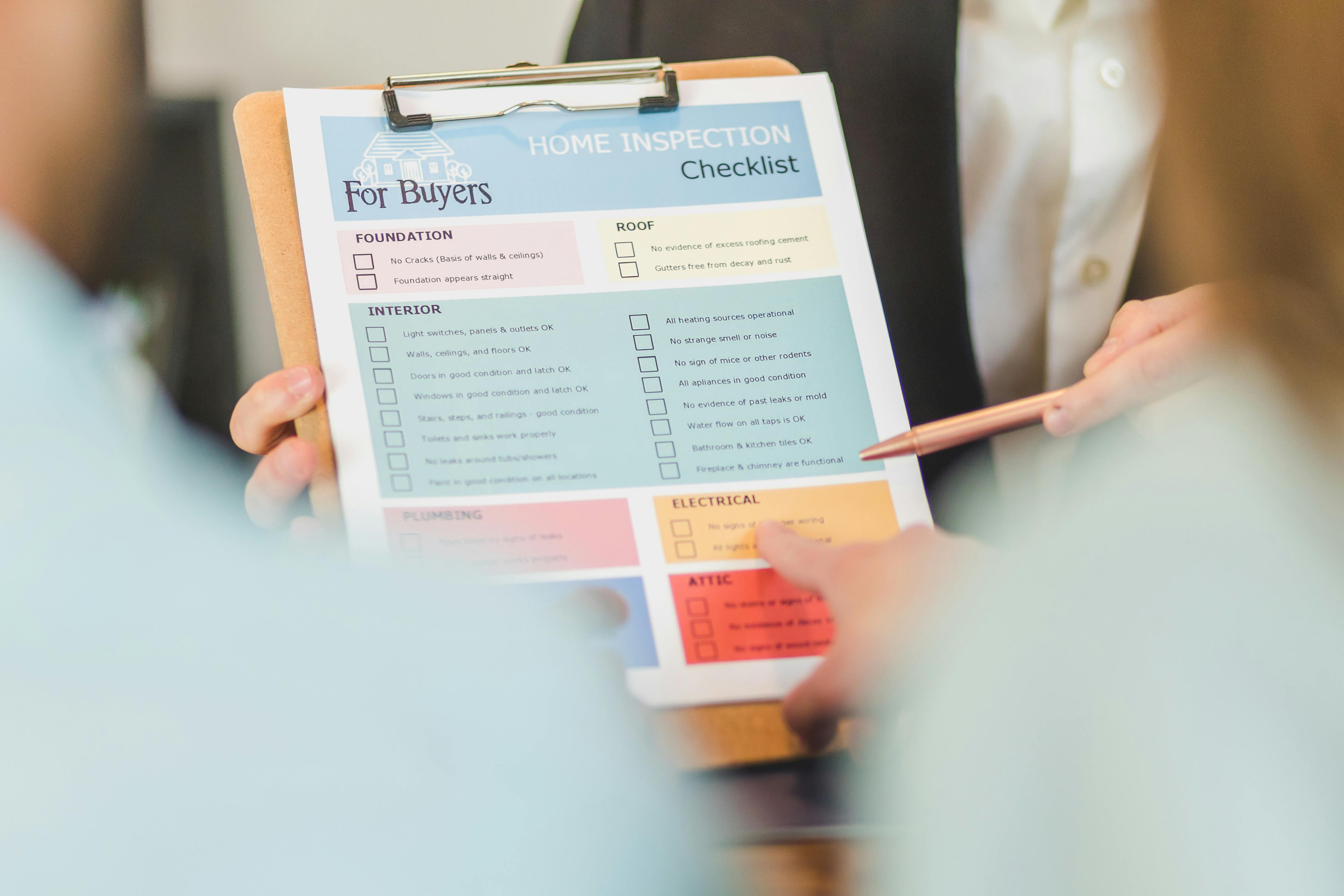
Here is the checklist to run through before any contract is signed:
Verify state licensure. Look up the contractor's license number in your state's public database. Illinois uses the IDFPR license lookup. Wisconsin uses the DSPS credential search. Missouri's Division of Professional Registration handles contractor licensing there. These databases are free and updated in real time. A valid license entry will show the license type, issue date, expiration date, and any disciplinary actions on file. A contractor not appearing in the database, or appearing with a lapsed or revoked license, should not receive your business.
Confirm insurance. Ask for a certificate of insurance naming you as an additional insured for the project duration. Call the insurer listed on the certificate to verify the policy is currently active. Do not accept a certificate dated before the storm. Understanding what "licensed and insured" really means for a contractor can save you significant legal exposure if something goes wrong mid-project.
Check local reviews. A contractor with three or more years of Google reviews, consistent responses to both positive and negative feedback, and a verifiable local address has real community accountability. A contractor with dozens of identical five-star reviews posted in a single week after a storm does not. Look for patterns, not just the overall star rating.
Get multiple quotes. Storm chasers bank on homeowners not shopping around. Three quotes from verified local contractors reveal the normal price range for your repair and expose inflated estimates quickly. Watch for bids that arrive pre-filled with every possible line item before anyone has inspected your roof, a reliable signal of an inflated estimate.
Use a government-database-verified platform. Platforms that programmatically check contractor license status, insurance filings, and business registrations before listing a contractor remove the manual verification burden from the homeowner. How contractor verification against government databases works explains what those checks actually confirm and what they don't cover.
Based on Above Board Pros' review of publicly filed consumer complaints with Midwest state attorneys general over a 24-month period (2023-2024), storm-related roofing disputes concentrated heavily among contractors with no verifiable state license at the time the complaint was filed. Local license verification consistently emerged as the most predictive factor distinguishing complaints that were resolved versus those where homeowners received no remedy.
Citation Capsule: Fewer than 30 percent of homeowners verify a contractor's license before signing a repair contract, according to the National Roofing Contractors Association. State licensing databases in IL, WI, and MO are publicly accessible and free. They display license status, expiration dates, and disciplinary history, making them the fastest single step a homeowner can take to screen out storm chaser contractors. The lookup takes under two minutes: enter the contractor's name or license number, confirm the license type matches residential roofing or general contracting, check that the expiration date is current, and look for any disciplinary actions or complaint history. A contractor whose name returns no results, or who appears with a lapsed license, is not qualified to work on your home regardless of how professional their sales pitch sounds. Illinois homeowners use the IDFPR portal; Wisconsin homeowners use the DSPS credential search. Both are mobile-friendly and free at the point of use.
Frequently Asked Questions
Storm chaser contractor scams generate more consumer protection complaints than almost any other home improvement category in the Midwest. These four questions come up most often from homeowners who have already had a contractor knock on their door or who are trying to vet a company they found on short notice.
What is a storm chaser contractor?
A storm chaser contractor is an out-of-area business or individual who travels to communities after severe weather events. Hailstorms, tornadoes, and straight-line wind events all trigger these deployments. Storm chasers use high-pressure sales tactics, promise to handle all insurance paperwork, and often collect large deposits before delivering substandard work or disappearing entirely. Unlike local contractors, they have no long-term stake in the community and face minimal consequences for poor work quality.
How can I tell if a roofing contractor is a storm chaser?
The most reliable indicators are: they knocked on your door unsolicited within days of the storm; they have out-of-state license plates or cannot provide a verifiable local business address; they pressure you to sign the same day; they offer to waive your deductible; they ask you to sign an Assignment of Benefits; they have no searchable local license number; and they request more than 30 percent upfront before any work begins. Two or more of these signs together should end the conversation.
Is it illegal for a contractor to waive my insurance deductible?
Yes, in most Midwest states. Illinois, Minnesota, Wisconsin, Missouri, and Ohio all have statutes prohibiting contractors from waiving, absorbing, or rebating an insurance deductible to induce a homeowner to sign a contract. The practice is treated as insurance fraud, and in some states the homeowner can also face liability for participating in a fraudulent claim. The Illinois Attorney General and the Wisconsin DATCP both publish explicit warnings about this practice.
What should I do if I already signed with a storm chaser?
Act within 3 business days if possible. Federal law and most Midwest state laws give you the right to cancel a home solicitation contract within that window. Send written cancellation by certified mail immediately. Photograph your roof in its current state. Preserve all contracts, receipts, and communications. File a complaint with your state attorney general's consumer protection division. If the 3-day window has passed, contact your credit card company if you paid by card, and consult a construction attorney before allowing any work to proceed.
How Can You Stay Ahead of Storm Chasers?
Storm chasers rely on two things: your urgency and your lack of information. This guide gives you the information. The urgency is harder to control after a storm has already damaged your home, which is why preparation before storm season matters.
The practical solution is to identify verified local roofers before you need one. Check a contractor's license now, while there is no pressure. Save the contact information for the highest-rated local company in your area. Know which state database to use and where to file a complaint if something goes wrong. That 10 minutes of preparation can protect you from weeks of legal and financial headaches later.
Every contractor who appears in a verified Midwest marketplace has been checked against government databases, including state licensing registries, insurance filings, and business registration records. You can search by service and ZIP code and know that every result has cleared that baseline before appearing in results.
For a detailed case study of what happens when platform verification claims don't hold up, see how the Angi contractor settlement with the Vermont AG changed the industry conversation.
After a storm, you deserve a contractor who will still be in business and accountable six months later. That means a local contractor with a verifiable address, a current license, and a track record in your community. Verification takes five minutes. A bad hire can take years to resolve. Do not let urgency override the basics.
Frequently Asked Questions
- What is a storm chaser contractor?
- A storm chaser contractor is an out-of-area business or individual who travels to communities after severe weather events — hailstorms, tornadoes, straight-line winds — to solicit roofing, siding, and gutter work. They use high-pressure tactics, promise fast insurance help, and often collect deposits before delivering substandard work or disappearing entirely.
- How can I tell if a roofing contractor is a storm chaser?
- Key warning signs: they knocked on your door unsolicited after the storm; they have out-of-state license plates; they cannot provide a local permanent business address you can verify; they pressure you to sign immediately or claim an insurance deadline is today; they offer to waive your deductible (illegal in most Midwest states); and they have no local reviews or presence.
- Is it illegal for a contractor to waive my insurance deductible?
- Yes, in most Midwest states. Illinois, Minnesota, Wisconsin, Missouri, and Ohio all prohibit contractors from waiving, absorbing, or rebating a homeowner's insurance deductible as an inducement to sign a contract. This practice is considered insurance fraud. A contractor offering to waive your deductible is a significant red flag and likely illegal in your state.
- What should I do if I already signed with a storm chaser?
- Act immediately. Most Midwest states give you 3 business days to cancel a home improvement contract signed at your residence under the right of rescission. Document everything: the contract, payments made, photos of roof condition, and all communications. Contact your state attorney general's consumer protection office. If you paid by credit card, initiate a chargeback. If the contractor has already started work, consult a construction attorney.