How Much Does a Roof Replacement Cost in Indianapolis? (2026)
Indianapolis roof replacements average $9,000–$18,000 for most homes. Full cost guide covering materials, storm insurance claims, and what Indiana's no-license rule means for roofing.
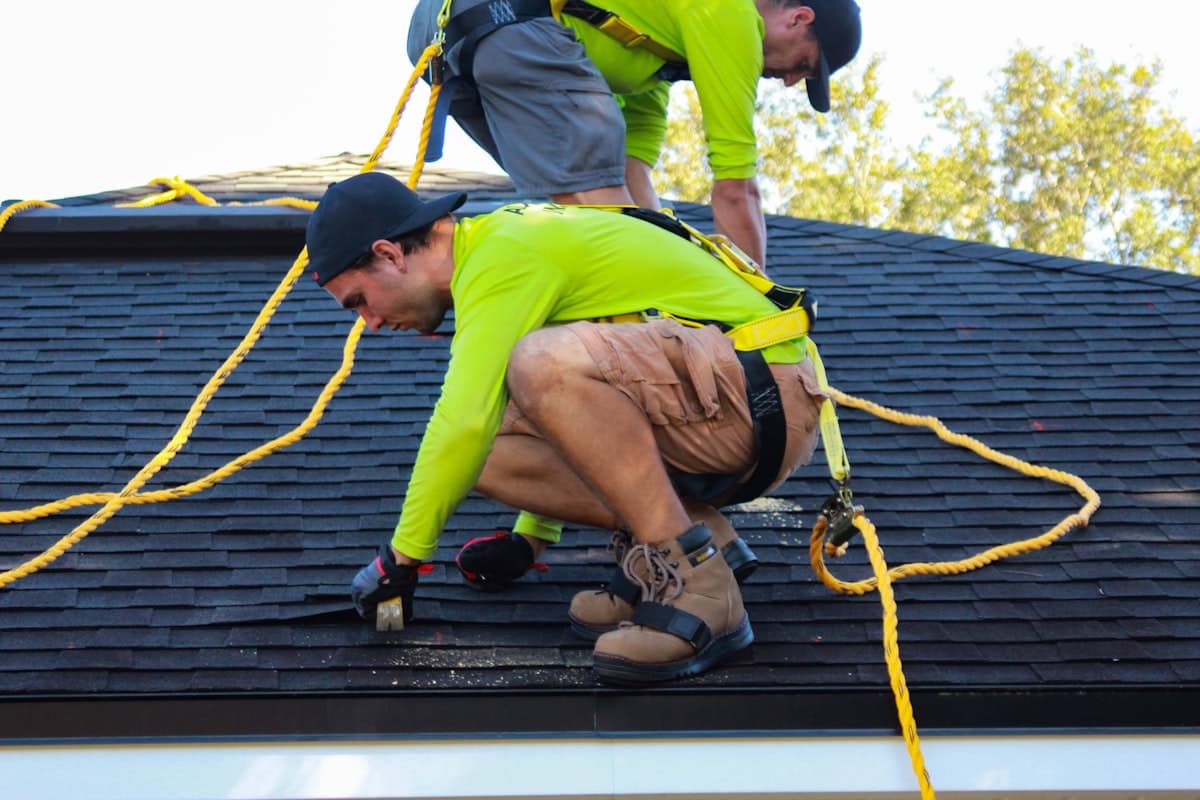
What Indianapolis Roof Replacements Actually Cost in 2026
Most Indianapolis homeowners replacing a standard asphalt shingle roof on a typical single-family home are spending $9,000–$18,000. The midpoint for a 2,000–2,400 square foot home with a moderate pitch and no significant decking damage lands around $11,000–$14,000 installed. That covers full tear-off, new underlayment, ice-and-water shield at the eaves and valleys, new flashing at all penetrations, ridge cap, and standard ridge ventilation.
Indianapolis is a competitive roofing market with strong contractor availability — which generally keeps prices reasonable. But it's also a high-hail-frequency market, which means two things: (1) insurance claims are common and the process is worth understanding before you need it, and (2) storm-chasing contractors descend on the metro after every major weather event, which creates real risk for homeowners who don't know what to verify.
The Four Tiers
Basic Replacement: $7,000–$11,000
What's included: Full tear-off of existing shingles (1 layer), new synthetic underlayment, standard 30-year architectural (dimensional) asphalt shingles, new drip edge, ridge cap, and standard ridge ventilation.
What's not included: Decking replacement, ice-and-water shield beyond code minimums, upgraded ventilation, or impact-resistant shingles.
Best for: Homes where the roof is at end of life but there's no active storm damage claim, the decking is in good condition, and the primary goal is a functional, warrantied roof at a reasonable cost.
Caution: Very low bids in this range sometimes reflect missing line items — no drip edge, no ice-and-water shield at valleys, or no tear-off (overlay on top of existing shingles, which voids most manufacturer warranties and violates Indianapolis permit requirements).
Mid-Range Replacement: $10,000–$16,000
What's included: Full tear-off, 30-year architectural shingles from a major manufacturer (GAF, Owens Corning, CertainTeed), full synthetic underlayment, ice-and-water shield at all eaves and valleys, new flashing at all penetrations (chimney, skylights, vents), ridge cap, upgraded ridge ventilation, new pipe boots.
What's not included: Class 4 impact-resistant upgrade, decking replacement, or premium shingle lines.
Best for: The large majority of Indianapolis homeowners. This scope covers everything a manufacturer warranty requires and everything a home inspector will look for at resale. This is the tier most insurance adjusters are writing estimates to for standard hail claims.
Impact-Resistant / Upgraded Replacement: $13,000–$20,000
What's included: Everything in the mid-range tier plus Class 4 impact-resistant shingles (Owens Corning Duration Storm, GAF Armor Shield II, CertainTeed NorthGate, or equivalent), often with full-system warranty coverage.
Why it matters in Indianapolis: Class 4 shingles qualify for insurance discounts with most Indiana carriers — typically 15–30% reduction in annual homeowners premium. On a $2,000/year policy, that's $300–$600 per year in savings, which over the life of the roof pays back the $2,000–$4,000 upgrade cost several times over. Ask your carrier what discount they offer before choosing standard shingles.
Best for: Anyone getting a roof replacement in Indianapolis, regardless of whether it's insurance-driven or not. The math almost always works.
Metal Roofing: $18,000–$35,000+
What's included: Standing seam steel or aluminum panels, or steel stone-coated tile. 40–50 year functional lifespan. Superior hail and wind resistance.
Best for: Homeowners planning to stay long-term who want to never replace the roof again, or homes in high-wind-exposure areas on the suburban fringe (Noblesville, Westfield, Avon) where storm exposure is higher.
Metal is the right long-term call for many Indianapolis homes. The challenge is that most insurance adjusters write estimates for like-kind replacement (asphalt for asphalt), meaning insurance proceeds typically won't cover the upgrade cost.
What Drives Cost in Indianapolis
Roof Size and Pitch
Roofing is priced per square (100 sq ft). An Indianapolis 2,000 sq ft ranch with a low-pitch roof is 16–18 squares. A two-story Colonial with a steeper pitch and more valleys is 22–26 squares. Steep pitches (7:12 or greater) add 10–20% to labor cost — crews work slower and need more safety equipment.
Approximate square counts for common Indianapolis home styles:
- 1,200 sq ft ranch: 14–16 squares
- 1,800 sq ft two-story Colonial: 18–22 squares
- 2,400 sq ft two-story Colonial: 24–28 squares
- 3,000 sq ft larger home: 28–34 squares
Decking Condition
Roof decking (the plywood or OSB substrate under the shingles) is not visible until tear-off. Soft spots, rot from chronic leaks, or hail damage that penetrated to the decking require replacement at $75–$120 per sheet (4'x8'). Budget $500–$2,000 as a contingency on any older home or one with a history of leaks. A reputable contractor will call you before replacing decking and show you the damage — not just add it to the final invoice.
Tear-Off Layers
Indianapolis permit requirements and manufacturer warranties require full tear-off before a new shingle installation. If your home has two existing layers of shingles — common on homes built before 2000 that have had one re-roof — expect an additional $1,000–$2,000 for disposal of the extra layer.
Penetrations and Flashing
Every chimney, skylight, pipe boot, and vent is a potential leak point and a labor cost. Homes with multiple chimneys, skylights, or flat/low-slope sections (like dormer roofs or garage sections) carry higher costs. Chimney flashing replacement alone runs $400–$1,200. Skylight flashing or curb replacement: $300–$900 per skylight.
The No-State-License Factor
Indiana has no statewide roofing contractor license — there is no state exam, no state board, and no state-level recourse if a roofing contractor takes your money and disappears. Indianapolis (Marion County) requires local registration, insurance, and a bond, but that requirement only applies within the city limits.
This matters enormously in a storm market. After any significant hail event in the Indianapolis metro, out-of-state storm-chasing contractors flood the area. Many are legitimate. Many are not — and there is no state licensing database to check. They will offer to "work with your insurance," take a significant deposit, install a roof (sometimes badly), and move on to the next storm market. Many use labor crews with no local accountability.
Red flags specific to Indianapolis storm chasers:
- Out-of-state plates, a PO Box address, and no permanent Indianapolis presence
- Aggressive pressure to sign an Assignment of Benefits (AOB) agreement immediately
- Promises to waive your insurance deductible (this is insurance fraud in Indiana)
- No city registration or Marion County roofing permit pulled under their name
Indiana Hail and Storm Exposure: What You Need to Know
Indianapolis sits at the northern edge of what climatologists call the US "hail alley" corridor, which extends from Texas through the central plains and into the Midwest. The National Weather Service Indianapolis office documents an average of 20–30 significant hail events annually across Indiana. Central Indiana counties — Marion, Hamilton, Hendricks, Johnson, Hancock — all experience hail at or above quarter-size (1 inch) multiple times most years.
Quarter-size hail (1 inch) causes cosmetic damage to asphalt shingles — surface granule loss that accelerates aging but may not trigger immediate leaks. Golf ball-size hail (1.75 inch) causes structural damage — bruising and cracking that compromises the shingle's weatherproofing. Insurance adjusters are looking for the threshold that constitutes functional damage, which varies by carrier.
Why Hail Damage Often Goes Unreported
Hail damage is not always obvious from the ground or even from the street. The granule loss that indicates functional damage is visible on the shingle surface and in the test squares that adjusters inspect — but many homeowners never know they have a valid claim because they never get an inspection after a storm.
If Indianapolis experienced a significant hail event within the last 18 months, it's worth having a reputable local roofing contractor inspect your roof before the claim window closes. Most Indiana policies have a 12-month (some 24-month) window from the date of loss to file a claim. Missing that window means a legitimate repair becomes an out-of-pocket cost.
Filing a Roof Insurance Claim in Indianapolis: Step by Step
1. Document the storm event. Note the date and time. NOAA's Storm Events Database and local weather apps can confirm hail size at your ZIP code — this documentation strengthens a disputed claim.
2. Get a roofing inspection before calling your insurer. A qualified local contractor can identify damage and help you understand whether you have a claim worth pursuing. This protects you from filing a claim for damage that's below your deductible (which raises your premium for no benefit) and ensures you understand what's actually damaged.
3. File the claim. Call your insurance carrier and open a claim. They'll schedule an adjuster inspection. The adjuster will inspect your roof and adjacent surfaces (gutters, AC units, siding) looking for impact marks consistent with the reported storm.
4. Review the adjuster's estimate. Insurance estimates are written to replace like-kind materials — standard architectural shingles, standard labor, standard components. If you want Class 4 impact-resistant shingles or a material upgrade, the cost difference is typically out-of-pocket. Compare the adjuster's estimate against your roofing contractor's scope — gaps in the adjuster's scope can be supplemented.
5. Watch for the wind/hail deductible. Many Indiana homeowners policies now carry a separate wind and hail deductible expressed as a percentage of dwelling coverage (commonly 1–2%) rather than a flat dollar amount. On a home insured for $350,000, a 1% hail deductible is $3,500. Know your deductible before you sign a contract.
6. Never sign an Assignment of Benefits. Signing an AOB transfers control of your claim to the contractor, removing your ability to negotiate or dispute the claim directly with your insurer. Indiana law does not prohibit AOBs, but most consumer advocates and insurance professionals strongly recommend against signing one.
7. The deductible waiver is fraud. Any contractor who offers to "eat your deductible" or "pay your deductible" is committing insurance fraud in Indiana. This will not end well for you.
Getting Accurate Bids in Indianapolis
Get three bids minimum. After a major storm event, contractor availability is tight and bids rise. If you can, get bids before the post-storm rush or be patient enough to wait it out — prices normalize within 3–6 months.
Bids should specify: Shingle manufacturer and product line, underlayment specification (synthetic vs. felt), ice-and-water shield coverage areas, flashing materials (aluminum vs. step vs. counter), ventilation plan, decking replacement policy, and permit information.
Verify Marion County registration. Indianapolis requires roofing contractors to register with the city. Pull the permit in your own name if possible — it stays with the property record and protects you if the contractor disappears mid-job. A contractor who won't pull permits is a major red flag.
Check the warranty structure. Manufacturer warranties on shingles require installation by a certified contractor to be valid. Ask whether the contractor is manufacturer-certified (GAF Master Elite, Owens Corning Platinum, etc.) — certified contractors have met installation training requirements the manufacturer will stand behind.
For guidance on the verification process, see How to Find a Contractor in Indianapolis and How to Hire a Contractor in Indiana Without a State License.
Timeline for an Indianapolis Roof Replacement
| Scenario | Timeline from Decision to Completion |
|---|---|
| Cash replacement, standard scope | 2–4 weeks |
| Cash replacement, insurance inspection first | 3–5 weeks |
| Insurance claim, straightforward | 4–8 weeks |
| Insurance claim with supplement dispute | 8–14 weeks |
| Metal roofing (material lead time) | 6–10 weeks |
Production time for the actual installation is typically 1–2 days for a standard asphalt replacement. The timeline is dominated by lead time, scheduling, and (for insurance projects) claim processing.
What AboveBoardPros Screened Contractors Bring to the Table
Contractors in the AboveBoardPros network go through an automated screening pass: a cross-check against the official state business registry where our automated check reaches that state, a scan of the contractor's own website for credential claims, and public business signals. When you request a quote through us, you're starting with contractors who've already cleared the baseline screening that most homeowners skip.
Frequently Asked Questions
- How much does a roof replacement cost in Indianapolis in 2026?
- A standard asphalt shingle roof replacement in Indianapolis costs $9,000–$18,000 for most single-family homes in 2026. The average for a 2,000–2,400 sq ft home runs $10,000–$15,000 installed, including tear-off, underlayment, flashing, and ridge ventilation. Metal roofing runs $15,000–$30,000+ for the same home. Size, pitch, and hail-resistant shingle upgrades are the primary cost drivers.
- Does homeowners insurance cover roof replacement in Indianapolis?
- Standard Indiana homeowners policies (HO-3) cover sudden damage from named perils including hail and wind. Indiana sits in a high-hail-frequency zone, and insurers increasingly issue separate wind/hail deductibles of 1–2% of dwelling value instead of flat deductibles. If you've had a significant hail event in the last 12–18 months, your roof is likely worth an inspection — damage that goes unreported beyond your policy's claim window may become out-of-pocket.
- What is the best roofing material for Indianapolis weather?
- Class 4 impact-resistant asphalt shingles are the best value for Indianapolis weather in 2026. They qualify for insurance discounts with most Indiana carriers (typically 15–30% premium reduction), are rated to withstand 2-inch hail, and cost only $500–$1,500 more than standard 3-tab or architectural shingles on a typical home. For longevity, standing seam metal is the most durable option but costs 2–3x as much upfront.
- Does Indiana require a roofing contractor to be licensed?
- Indiana has no statewide roofing contractor license. Like general contractors, licensing is local: Indianapolis (Marion County) requires roofing contractors to register with the city, carry general liability and workers' comp, and post a bond. This matters especially after storm events, when out-of-state storm chasers flood the Indianapolis market following major hail events — often with no local registration, minimal insurance, and substandard workmanship.
- How long does a roof replacement take in Indianapolis?
- A standard asphalt shingle replacement on a typical Indianapolis home takes 1–2 days for the production crew. Add 3–7 days lead time for material delivery after contract signing. Insurance-driven replacements add 1–4 weeks for adjuster inspection, estimate approval, and supplemental claim processing if needed. Total time from decision to completed roof: 2–4 weeks for cash projects, 4–8 weeks for insurance claims.