Painting Cost in Chicago: 2026 Interior & Exterior Guide
Interior painting in Chicago runs $350–$1,800 per room; exterior runs $4,500–$15,000+. Lead paint rules, permits, and quote red flags covered.
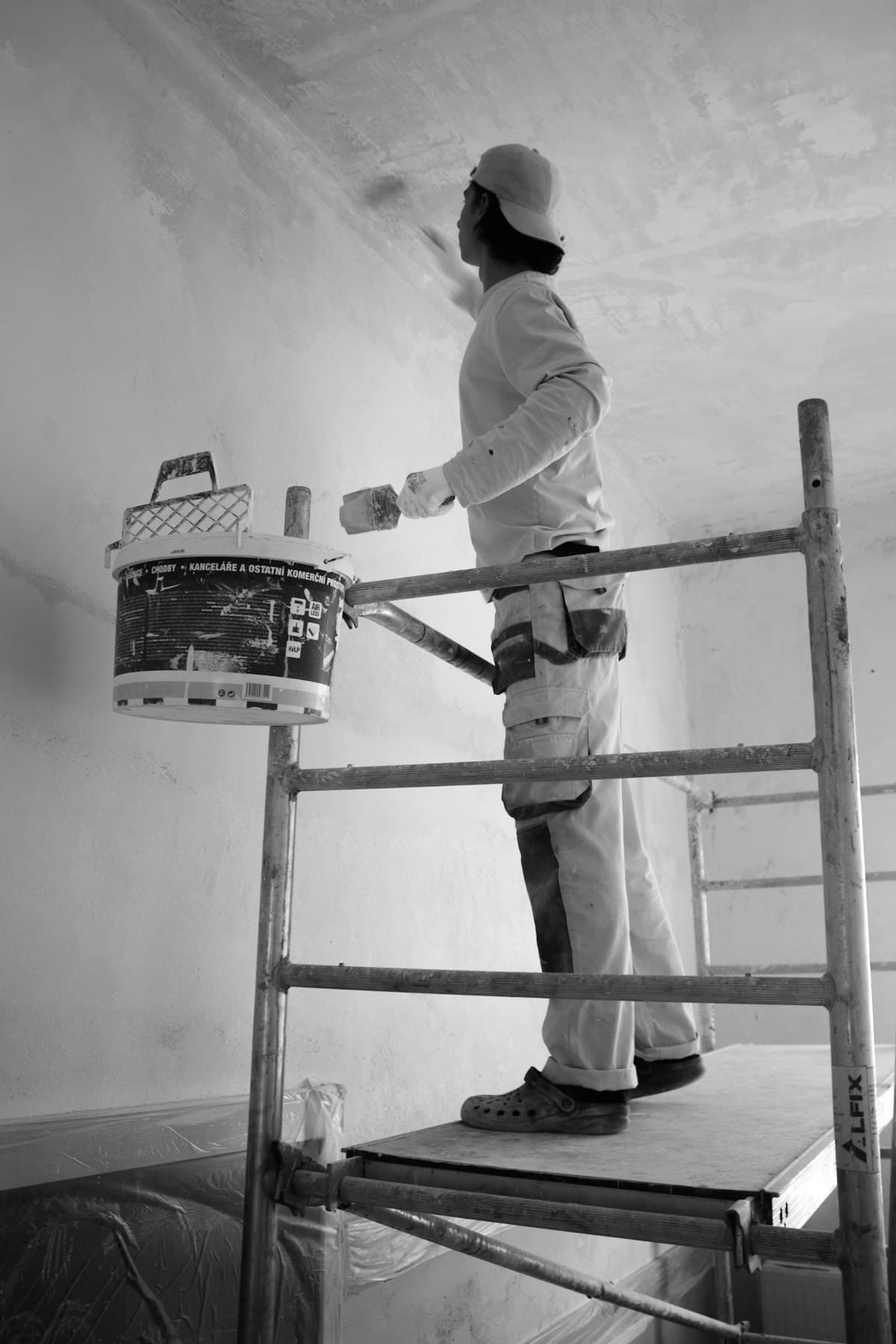
Painting is one of the most visible improvements a Chicago homeowner can make, and one of the most common pre-sale refreshes across Chicagoland. But Chicago's labor market, climate, and older housing stock push costs well above what generic national pricing guides suggest. Here is what interior and exterior painting actually costs in the Chicago metro in 2026, and what drives the wide range.
Interior Painting Cost in Chicago (2026)
Interior painting in Chicago runs $2–$6 per square foot of wall and ceiling surface in 2026 — higher than the $1.50–$3.50 range typical of other Midwest metros. A mid-range project in a standard room with proper surface prep, two coats of quality paint on walls, ceilings, and trim will land in the $3–$4.50 per square foot range for most Chicago homeowners.
| Room Type | Low End | Mid-Range | High End |
|---|---|---|---|
| Single room (average, ~12x12) | $350 | $650 | $1,100 |
| Master bedroom (larger, with trim) | $600 | $900 | $1,500 |
| Living / dining room | $700 | $1,100 | $1,800 |
| Full 3-bedroom home interior | $4,500 | $7,000 | $10,000 |
| Full 4-bedroom home interior | $6,000 | $9,000 | $14,000 |
Low-end figures reflect single-color painting on freshly prepped, move-in-ready surfaces with minimal patching. High-end figures reflect extensive surface repair, multiple colors, vaulted ceilings, trim and door painting, and premium paint products.
Chicago per-square-foot benchmark: Expect $2.50–$4.50 per square foot for a standard full-house interior paint job including walls, ceilings, and trim. Rooms with 9-foot-or-higher ceilings, detailed crown molding, or panel doors add $150–$400 per space for equipment and labor time.
For project scope comparisons and pricing in other Midwest markets, see our Midwest painting cost guide.
Exterior Painting Cost in Chicago (2026)
Exterior painting in Chicago is priced by paintable surface area — not the home's square footage — which means a two-story with a full wraparound has considerably more paintable surface than a two-story with a plain box profile. Chicago exterior painting costs run 10–20% above the national average, driven by climate-specific prep requirements and labor rates.
| Home Type | Low End | Mid-Range | High End |
|---|---|---|---|
| Single-story ranch (under 1,400 sq ft) | $3,500 | $5,500 | $7,500 |
| Two-story single-family (1,800–2,500 sq ft) | $5,500 | $8,000 | $12,000 |
| Three-flat / two-flat (Chicago-specific) | $7,000 | $10,500 | $14,000 |
| Large Victorian / Craftsman (complex trim) | $9,000 | $13,000 | $18,000+ |
Three-flats and two-flats — a defining feature of Chicago's North Side, Logan Square, Wicker Park, and inner-ring suburbs — require scaffolding or multi-story lift equipment to reach upper facades, and typically have wood trim details, porch columns, and exposed staircases that add substantially to labor. Budget on the high side of the range for buildings with decorative cornices, bay windows, or original wood siding.
By siding type (per sq ft of surface):
- Wood clapboard / lap siding: $3.00–$5.50 — high prep demands; scraping, caulking, priming required
- Vinyl siding: $2.00–$3.50 — lower prep cost, but adhesion prep is still essential
- Brick (paint over brick): $2.50–$4.50 — masonry primer required; fewer linear surfaces but high absorbency adds paint volume
- EIFS / stucco: $3.00–$5.00 — crack repair and elastomeric primer add cost; inspect for moisture before painting
Why Chicago Painting Costs Are Higher Than the Midwest Average
Chicago painting labor runs 15–25% above the Midwest median. Three structural factors drive the premium that shows up in every quote.
The union labor market. The Chicago metro has one of the most active trade union environments in the Midwest. The Painters District Council 14 (IUPAT) sets wage standards that serve as a market benchmark even for non-union shops competing for the same labor pool. According to BLS Occupational Employment and Wage data for the Chicago-Naperville-Elgin MSA (May 2024), painters in the Chicago metro earn a median hourly wage well above the national median of $23.41 — reflecting the region's higher cost-of-living and organized labor market.
Climate-driven prep. Chicago's temperature swings — from below zero in January to 95°F in July — are among the most extreme in the Midwest. That thermal cycling causes paint film to expand and contract repeatedly, which accelerates failure on any surface that wasn't properly prepped. Professional painters working in Chicago invest more time in caulking, priming, and spot repairs than in more temperate markets. Cutting prep on a Chicago exterior does not save money long-term — it just moves the failure date forward.
Older housing stock. A substantial share of Chicago's owner-occupied housing stock was built before 1960. Older homes require more prep: more layers of old paint to stabilize, more wood rot to address, more deteriorated caulk to remove and replace. Lead paint management requirements (covered below) add cost to virtually any pre-1978 project that involves scraping or surface disturbance.
Chicago-Specific Factors That Affect Your Quote
Several factors specific to the Chicago market affect the final cost of any painting project — and should be discussed with any contractor before signing a contract.
Lead paint requirements. Chicago has one of the highest concentrations of pre-1978 housing in the country. The EPA Renovation, Repair, and Painting (RRP) Rule applies to any contractor disturbing more than 6 square feet of interior painted surface or more than 20 square feet of exterior painted surface in a pre-1978 home. The contractor's firm must be registered as an EPA Lead-Safe Certified Firm, the on-site workers must be trained, and work must follow containment, HEPA-vacuum, and disposal protocols. This adds $300–$800 to a typical exterior job, more on large multi-unit buildings. Verify certification at cfpub.epa.gov/flpp. Painters who tell you RRP "isn't required" for a pre-1978 exterior are wrong — and you are legally exposed if a violation occurs on your property. The Illinois Department of Public Health (IDPH) also enforces lead-safe renovation requirements under Illinois law.
No building permit required — with one important exception. The Chicago Department of Buildings confirms that standard painting — interior or exterior — does not require a building permit. You do not need to pull a permit to have your house or three-flat repainted. The exception: properties that are designated Chicago Landmarks or located within a Chicago Landmark District may require review and approval by the Commission on Chicago Landmarks before altering exterior color or finish. If your property is in a historic district (examples: Prairie Avenue, Astor Street, portions of Pullman, Kenwood), verify before work begins.
HOA color restrictions. Many suburban Chicagoland communities — particularly planned developments in Naperville, Schaumburg, Bolingbrook, Vernon Hills, and similar suburbs built from the 1970s through 2000s — have HOA or condo association Covenants, Conditions, and Restrictions (CC&Rs) that restrict exterior paint colors to an approved palette. Some require written architectural review board (ARB) approval before any exterior color change. Approval timelines vary from 7 to 30 days. If you live in an HOA community, confirm the approval requirement and timeline before scheduling your painter — and get ARB approval in writing before work begins.
Window and siding prep for Chicago winters. The caulk lines around windows and door frames are the most important exterior prep item in Chicago, full stop. Thermal cycling causes caulk to crack and separate faster than in milder climates, and failing caulk allows moisture infiltration that leads to wood rot, water damage, and paint failure within 2–3 years. Professional painters in Chicago should be recaulking all window and door perimeters as a standard part of the job scope — not an add-on. Ask specifically whether caulking is included and what product will be used. Polyurethane or siliconized acrylic caulk rated for -40°F to 250°F is the appropriate product for Chicago's climate.
How to Evaluate a Chicago Painting Quote
Getting three quotes is standard advice — but knowing how to compare them is more useful than collecting numbers. Chicago painting quotes can vary by 30–60% for the same scope, and the cheap bid is almost never a bargain.
A professionally prepared Chicago painting quote should specify:
- Scope of surfaces: Exactly which surfaces are included — walls only, or walls plus ceilings, trim, doors, shutters, soffits, and fascia. A quote that says "full exterior" without specifying means nothing.
- Number of coats: Two coats of finish paint over primer is the professional standard. One coat on a color change is a shortcut that produces uneven coverage and early wear.
- Prep work described: The quote should describe scraping, caulking, priming, and surface repair. If prep work is not mentioned, it will likely be minimal.
- Paint brand and product line: Sherwin-Williams Duration, Emerald, or Benjamin Moore Aura / Regal are appropriate for Chicago exterior conditions. Cheaper contractor-grade paints — even from major brands — have less elasticity, meaning they crack and peel faster under Chicago thermal cycling.
- Lead-safe certification: For pre-1978 homes, the quote should reference EPA RRP compliance and the firm's Lead-Safe Certification.
- Payment schedule: A professional contractor will ask for no more than 30% upfront. Never pay in full before work begins.
Check the contractor's license and registration. For Illinois, painters are not required to hold a state license (unlike roofers or plumbers), but verify that the contractor carries General Liability insurance (minimum $1M per occurrence) and Workers' Compensation insurance. Call the insurance carrier to confirm coverage is active — do not rely solely on the certificate. For more guidance on the hiring process, see how to find a contractor in Chicago and how to hire a contractor in Illinois.
Best Time of Year to Paint in Chicago
Interior painting has no meaningful seasonal restriction and can be done year-round.
Exterior painting requires sustained temperatures above 50°F during application and for at least 24–48 hours after. Most latex paints now have cold-temperature formulations that extend the working range slightly, but below 45°F, adhesion and film formation are compromised regardless of product.
Late May through June is the primary window. Days are long, temperatures are consistently in the 60–80°F range, and humidity is manageable. Contractors are scheduling into this window early — if you want a May or June project, contact painters in March.
September is the second-best window — often better than summer for large projects. The summer heat has broken, humidity is lower than July and August, and temperature swings are moderate. The catch: September book up quickly once homeowners realize this, and October's arrival shortens the usable days rapidly.
What to avoid: July and August can see sustained heat above 90°F, which causes paint to dry too quickly and prevents proper film formation. Lake-effect conditions on the North Shore create high morning dew that can persist on siding surfaces until 10–11 a.m., shortening the workable day. Do not schedule exterior painting in November or later in the Chicago metro — one cold snap before the paint fully cures ruins the entire job.
If your siding has significant peeling, exposed wood, or areas affected by moisture, review whether siding options that affect paint prep are worth addressing before repainting — particularly on older wood-sided Chicagoland homes where the substrate may no longer hold paint reliably regardless of the coating applied.
Frequently Asked Questions
How much does interior painting cost in Chicago in 2026?
Interior painting in Chicago runs $2–$6 per square foot or $350–$1,800 per room depending on size and complexity. A full interior for a 3-bedroom home typically costs $5,000–$10,000 in 2026. Chicago labor rates run 15–25% above other Midwest metros, reflecting the union labor market and higher cost of living.
How much does exterior painting cost in Chicago in 2026?
Exterior painting in Chicago runs $4,500–$9,000 for a typical single-family home in 2026, with larger or more complex homes reaching $12,000–$18,000. The Chicago metro commands a 10–20% premium over national averages due to harsh winters, a demanding prep environment, and higher labor costs. Three-flats and two-flats run $7,000–$14,000 for a full exterior repaint.
Does exterior painting require a permit in Chicago?
No — standard exterior painting does not require a building permit from the Chicago Department of Buildings. However, any work on a pre-1978 home that disturbs more than 20 square feet of exterior painted surface requires EPA RRP-certified contractors and lead-safe work practices. Projects on Chicago landmark properties or in landmark districts may have additional review requirements.
What lead paint rules apply to painters in Illinois?
The federal EPA Renovation, Repair, and Painting (RRP) Rule applies in Illinois. Any contractor disturbing more than 6 sq ft of interior painted surface or 20 sq ft of exterior painted surface in a pre-1978 home must be employed by an EPA Lead-Safe Certified Firm and follow containment, HEPA-vacuum, and proper disposal protocols. Fines for non-compliance reach $37,500 per day. Always verify EPA RRP certification for pre-1978 homes.
When is the best time to paint the exterior of a house in Chicago?
Late May through June and the month of September are the optimal windows for exterior painting in Chicago. Temperatures should be 50–85°F during application and for 24–48 hours after. Chicago's summer heat waves and high humidity can push conditions outside the ideal range. Fall painting must be completed before overnight lows drop below 40°F — typically by early October in the northern suburbs.
Why is painting more expensive in Chicago than in other Midwest cities?
Chicago's higher painting costs stem from three factors: a strong union labor market that sets a higher wage floor for trade workers, a harsh four-season climate that demands more extensive prep work and premium weather-resistant products, and an older housing stock (significant pre-1960 inventory) that requires additional lead-safe procedures, surface repair, and multi-coat applications. Projects in the city proper also involve logistics costs — parking, building access, and project staging — not present in suburban markets.
Find a Verified Painting Contractor in Chicago
Every painting contractor in the AboveBoardPros network has been verified against government databases for business registration, insurance status, and license compliance before receiving leads. When you request a quote through aboveboardpros.com, you start with contractors who have already cleared the screening that most homeowners skip — no chasing certificates, no guessing on coverage. Request a quote and compare bids from verified Chicago-area painters today.
Frequently Asked Questions
- How much does interior painting cost in Chicago in 2026?
- Interior painting in Chicago runs $2–$6 per square foot or $350–$1,800 per room depending on size and complexity. A full interior for a 3-bedroom home typically costs $5,000–$10,000 in 2026. Chicago labor rates run 15–25% above other Midwest metros, reflecting the union labor market and higher cost of living.
- How much does exterior painting cost in Chicago in 2026?
- Exterior painting in Chicago runs $4,500–$9,000 for a typical single-family home in 2026, with larger or more complex homes reaching $12,000–$18,000. The Chicago metro commands a 10–20% premium over national averages due to harsh winters, a demanding prep environment, and higher labor costs. Three-flats and two-flats run $7,000–$14,000 for a full exterior repaint.
- Does exterior painting require a permit in Chicago?
- No — standard exterior painting does not require a building permit from the Chicago Department of Buildings. However, any work on a pre-1978 home that disturbs more than 20 square feet of exterior painted surface requires EPA RRP-certified contractors and lead-safe work practices. Projects on Chicago landmark properties or in landmark districts may have additional review requirements.
- What lead paint rules apply to painters in Illinois?
- The federal EPA Renovation, Repair, and Painting (RRP) Rule applies in Illinois. Any contractor disturbing more than 6 sq ft of interior painted surface or 20 sq ft of exterior painted surface in a pre-1978 home must be employed by an EPA Lead-Safe Certified Firm and follow containment, HEPA-vacuum, and proper disposal protocols. Fines for non-compliance reach $37,500 per day. Always verify EPA RRP certification for pre-1978 homes.
- When is the best time to paint the exterior of a house in Chicago?
- Late May through June and the month of September are the optimal windows for exterior painting in Chicago. Temperatures should be 50–85°F during application and for 24–48 hours after. Chicago's summer heat waves and high humidity can push conditions outside the ideal range. Fall painting must be completed before overnight lows drop below 40°F — typically by early October in the northern suburbs.
- Why is painting more expensive in Chicago than in other Midwest cities?
- Chicago's higher painting costs stem from three factors: a strong union labor market that sets a higher wage floor for trade workers, a harsh four-season climate that demands more extensive prep work and premium weather-resistant products, and an older housing stock (significant pre-1960 inventory) that requires additional lead-safe procedures, surface repair, and multi-coat applications. Projects in the city proper also involve logistics costs — parking, building access, and project staging — not present in suburban markets.