Kitchen Remodel Cost in Minnesota 2026
Minnesota kitchen remodels run $40,000–$120,000 for most homes. 2026 breakdown by scope, city-by-city pricing, permits, and how to hire a verified contractor.
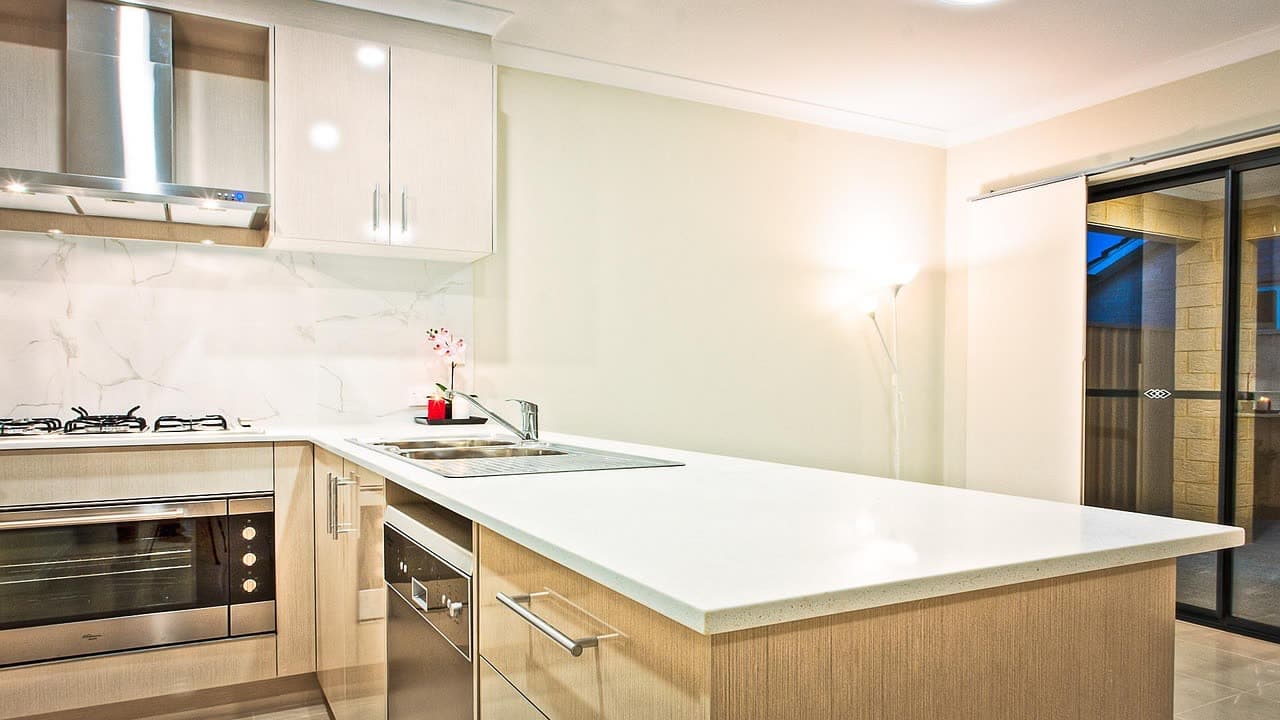
What Minnesota Kitchen Remodels Actually Cost in 2026
A mid-range kitchen remodel in Minnesota costs $40,000–$85,000 in 2026, with Twin Cities projects running 10–20% above the national average due to elevated trade labor rates, an older housing stock with frequent discovery costs, and a compressed construction season. Most homeowners should budget $45,000–$75,000 for a complete gut-and-rebuild with semi-custom cabinets and quartz countertops, and reserve 15–20% contingency on any pre-1970 home.
The "$50,000 kitchen remodel" figure circulates in national home improvement coverage — and in Minnesota, that number is a reasonable starting point for a modest scope, but it can climb fast. The Twin Cities labor market, the state's older housing stock, and a short outdoor construction season combine to push Minnesota kitchen costs 10–20% above national averages (Remodeling Magazine, Cost vs. Value Report 2025). Most homeowners doing a genuine full remodel are looking at $40,000 at the low end for modest scope with basic materials, and $120,000+ for a high-spec project with layout changes or custom cabinetry.
The good news: Minnesota buyers are practical. A well-executed mid-range kitchen renovation — solid semi-custom cabinets, quartz countertops, a clean backsplash, and upgraded appliances — wins showings and delivers strong resale return without requiring the custom-everything spending that drives projects toward six figures.
Key Takeaways:
- Mid-range full remodel: $40,000–$85,000 in most Minnesota markets
- Twin Cities premium: 10–20% above the national average
- Minor remodel ROI in West North Central (MN): ~68% at resale (Remodeling Magazine 2025 Cost vs. Value)
- Permits required for electrical, plumbing, and mechanical work in all Minnesota cities
- Older homes (pre-1960) should budget a 15–20% contingency for hidden discoveries
The Four Cost Tiers for Minnesota Kitchens
Minnesota kitchen projects break into four distinct cost tiers based on scope and material quality. The cosmetic refresh ($12,000–$28,000) covers paint, hardware, and backsplash updates on existing cabinet boxes. The mid-range remodel ($40,000–$85,000) replaces cabinets, countertops, and appliances without moving plumbing. High-end remodels ($85,000–$150,000) add layout changes and custom cabinetry. Full custom gut renovations ($150,000+) include structural work and premium finishes throughout (HomeAdvisor True Cost Guide, 2025; Angi Kitchen Remodel Cost Report, 2025).
Cosmetic Refresh: $12,000–$28,000
What's included: Cabinet painting or refacing with new hardware, backsplash replacement or tile overlay, updated lighting fixtures, faucet and sink replacement, fresh paint throughout.
What's not included: New cabinet boxes, countertops, appliances, flooring, or any layout changes.
Best for: Kitchens that function well but look dated. Minnesota's older housing stock is full of kitchens where the layout and structural bones are sound but the aesthetic hasn't been touched since the 1980s. If your cabinets are solid, your layout works, and your appliances are less than eight years old, a cosmetic refresh delivers the highest dollar-for-dollar return of any kitchen investment.
Minnesota note: Many 1940s–1960s homes in Minneapolis neighborhoods like Linden Hills, Longfellow, and South Minneapolis have original solid wood cabinets built to last. Painting those boxes and replacing the fronts, hardware, and countertops costs a fraction of full replacement — and returns more at resale in a market where buyers know what they're looking at.
Mid-Range Remodel: $40,000–$85,000
What's included: Semi-custom cabinet replacement (Kraftmaid, Medallion, Merillat, or comparable), quartz or granite countertops, tile backsplash, mid-grade appliances ($3,500–$7,500 package), updated electrical and plumbing fixtures, new flooring (LVP or tile), new lighting.
What's not included: Layout changes that move plumbing, custom cabinetry, or premium appliance suites.
Best for: The majority of Minnesota homeowners doing a primary kitchen renovation. This is the tier that handles most standard gut-and-rebuild projects without layout changes. Returns approximately 55–68% at resale across most Minnesota markets (Remodeling Magazine, Cost vs. Value 2025, West North Central region). In the Twin Cities metro, this is the entry point for a professionally managed full remodel.
Minnesota note: For homes in suburbs like Eden Prairie, Maple Grove, Woodbury, or Burnsville, mid-range finishes align well with neighborhood buyer expectations. Over-improving with custom cabinetry in a neighborhood where comparable homes sell with semi-custom cabinets is difficult to justify financially.
High-End Remodel: $85,000–$150,000
What's included: Custom or high-end semi-custom cabinetry, stone slab countertops (quartz, granite, or natural stone), designer tile, premium appliances ($9,000–$20,000 package), layout changes (opening walls, adding islands, relocating plumbing), upgraded electrical panel capacity, potential structural work.
Best for: Homeowners in Edina, Wayzata, Minnetonka, North Oaks, or Rochester's premier neighborhoods planning to stay 8–12 years. Also appropriate for older Kenwood, Crocus Hill, or Summit Hill homes where the kitchen is the genuine weak link in an otherwise high-value property.
Returns 50–65% at resale in Minnesota. At this tier, you are primarily investing in daily quality of life.
Minnesota note: High-end remodels in the Twin Cities frequently surface the hidden costs that come with older Minnesota homes: galvanized pipes that need replacement when walls open ($4,000–$14,000), outdated knob-and-tube or aluminum wiring requiring a full panel update ($8,000–$18,000), and in some cases asbestos tile or insulation requiring licensed abatement ($2,000–$8,000). Budget 15–20% contingency on any pre-1970 home.
Full Custom / Gut Renovation: $150,000+
What's included: Everything in the high-end tier plus structural changes, custom built-ins, integrated panel-ready appliances, smart home integration, relocated gas lines, potentially moving load-bearing walls with engineered beam installation.
Best for: High-value homes in Edina, Orono, Deephaven, or North Oaks where the kitchen is a primary selling feature, and buyers expect showroom-quality finishes. Returns 45–55% at resale. This is a lifestyle investment, not a financial one, for most Minnesota homeowners.
What Drives Up the Cost of a Minnesota Kitchen Remodel?
Labor and cabinetry together consume 60–80% of a typical Minnesota kitchen remodel budget, with the Twin Cities commanding a measurable premium over comparable Midwest metros. Skilled trade labor in Minneapolis runs $60–$100+ per hour depending on trade, with general contractors averaging $65/hr and licensed plumbers and electricians billing $75–$120/hr — well above the national median for residential construction work — and cabinet costs run $14,000–$32,000 for semi-custom work suitable for most suburban markets (PayScale General Contractor Hourly Pay in Minneapolis, 2025; NAHB Cost of Constructing a Home, 2024).
Labor: The Twin Cities Premium (30–40% of budget)
Skilled construction trade labor in Minneapolis and St. Paul runs $60–$100+ per hour depending on trade specialty — meaningfully above the national median and above comparable Midwest markets like Indianapolis or Columbus (PayScale, 2025; Minnesota Department of Labor and Industry prevailing wage schedules, 2025). General contractors average approximately $65/hr in the Twin Cities market. For a mid-range full remodel, labor alone typically runs $15,000–$35,000. Minnesota's short construction season (roughly April through November for exterior work) concentrates demand in spring and fall, pushing bids higher during peak scheduling periods.
This premium is consistent across the metro: even non-union shops price competitively to retain skilled tradespeople in a tight market.
Cabinets: The Largest Single Line Item (30–40% of total budget)
Cabinets are the budget anchor in any kitchen remodel. In Minnesota:
- Stock cabinets (big-box, RTA): $6,000–$15,000 installed. Appropriate for rentals or budget refreshes. Limited sizing and configuration flexibility.
- Semi-custom (Kraftmaid, Medallion, Wellborn, Merillat): $14,000–$32,000 installed. The right choice for most mid-range projects in the Twin Cities. Allow 6–8 weeks of lead time.
- Custom local cabinetry: $32,000–$75,000+. Fully tailored to your space. Common in Edina, Minnetonka, and Rochester high-end renovations.
- Cabinet refacing (new doors and drawer fronts on existing solid boxes): $7,000–$18,000. Highest ROI option when existing cabinet structures are sound.
Countertops (10–15% of budget)
Minnesota countertop pricing by material (installed, per square foot):
- Laminate: $20–$50/sq ft
- Butcher block: $40–$100/sq ft
- Quartz: $75–$150/sq ft
- Granite: $80–$175/sq ft
- Marble or quartzite: $100–$250+/sq ft
Most Minnesota kitchens have 30–50 square feet of counter space. Quartz is the practical choice for resale — it's non-porous, requires no sealing, and is the material Midwest buyers expect to see in a renovated kitchen.
Hidden Costs in Older Homes
Minnesota has one of the highest concentrations of pre-1960 housing in the West North Central region. Once kitchen walls open, common discoveries include:
- Galvanized pipes: Need replacement when walls open. $4,000–$14,000 depending on scope.
- Outdated electrical: Knob-and-tube or aluminum wiring requiring panel and circuit updates. $8,000–$18,000.
- Asbestos tile or insulation: Requires licensed abatement in older homes. $2,000–$8,000.
- Lead paint: Common in pre-1978 homes. Safe work practices required; additional disposal cost.
Budget a 15–20% contingency on any pre-1970 Minnesota home — not as a worst-case estimate, but as a realistic planning figure.
Minnesota City-by-City Kitchen Remodel Costs (2026)
Kitchen remodel costs across Minnesota span a $28,000–$200,000+ range depending on city, project scope, and housing age. Minneapolis and St. Paul run $45,000–$120,000 for a mid-range full remodel, while outstate markets like Mankato and St. Cloud come in at $28,000–$60,000 for equivalent scope — a 35–40% spread driven primarily by trade labor rates and the density of discovery costs in older housing stock (local contractor survey data; U.S. Census Bureau American Community Survey housing age data, 2023).
Costs vary meaningfully across Minnesota based on local labor rates, housing stock, and contractor density. The chart below shows typical mid-range full remodel ranges by city.
| City | Cosmetic Refresh | Mid-Range Full Remodel | High-End Remodel |
|---|---|---|---|
| Minneapolis | $14,000–$28,000 | $45,000–$120,000 | $100,000–$200,000+ |
| St. Paul | $13,000–$26,000 | $42,000–$110,000 | $95,000–$185,000+ |
| Rochester | $11,000–$22,000 | $40,000–$80,000 | $80,000–$155,000 |
| Duluth | $10,000–$20,000 | $35,000–$75,000 | $75,000–$140,000 |
| Bloomington | $12,000–$24,000 | $40,000–$90,000 | $85,000–$160,000 |
| Edina / Wayzata | $15,000–$30,000 | $50,000–$130,000 | $110,000–$200,000+ |
| Mankato / St. Cloud | $9,000–$18,000 | $28,000–$60,000 | $60,000–$110,000 |
Why Twin Cities costs run highest: Minneapolis and St. Paul combine the highest trade labor rates in the state with the oldest housing stock — pre-WWII bungalows and colonials line neighborhoods from Uptown to Como Park. The older the home, the higher the probability of discovery costs during demo. Edina and Wayzata add a premium-market contractor dynamic where project minimums and finishes expectations both push bids higher.
Rochester's outlier: Rochester is an interesting market. Standard mid-range remodels are priced similarly to or slightly below the Twin Cities. But for high-end and luxury projects, Rochester bids can rival Minneapolis — driven by a Mayo Clinic-anchored economy that sustains a buyer pool with high income and exacting finish expectations. Design-build firms in the Rochester area regularly handle projects starting above $120,000.
What Is the ROI on a Kitchen Remodel in Minnesota?
In Minnesota, a minor kitchen remodel returns approximately 67.6% of its cost at resale in the West North Central region, according to Remodeling Magazine's 2025 Cost vs. Value Report — below the national average of 113% due to the regional market dynamics of the Midwest. A major mid-range gut renovation returns roughly 51–60%, while full high-end renovations above $90,000 return closer to 45–51%. The strategic inflection point sits around $25,000–$45,000 in most Minnesota markets, where every dollar spent on targeted cosmetic improvements returns the highest share.
Understanding where spending converts to home value versus where it disappears is the most important financial planning work before any kitchen project.
According to Remodeling Magazine's 2025 Cost vs. Value Report (West North Central region data, published January 2025), minor kitchen remodels in Minnesota's region return approximately 67.6% of cost at resale — with an average remodel cost of $21,455 recouping roughly $14,532 in added home value. Nationally the figure is 113%, but the West North Central market trades at a meaningful discount to coastal and Sun Belt regions. Full gut renovations above $90,000 return roughly 45–51% (Remodeling Magazine, Cost vs. Value 2025).
The strategic inflection point in most Minnesota markets is around $45,000–$55,000. Below that threshold, every dollar you spend on targeted improvements (new cabinet fronts, quartz counters, updated appliances) generates strong buyer response. Above it, returns diminish — not because the work isn't quality, but because the buyer pool that values custom-everything at $120,000 is narrower in most Minnesota neighborhoods.
The neighborhood price ceiling rule: Your kitchen investment should never push your total home value past 120% of the median comparable sale in your neighborhood. A $100,000 kitchen in a neighborhood where homes sell for $280,000 is a gift to the next buyer — it does not add $100,000 to your sale price.
Do You Need a Permit for a Kitchen Remodel in Minnesota?
Minnesota requires separate trade permits for any kitchen work touching electrical, plumbing, or mechanical systems under the Minnesota State Building Code (Chapter 1300). A $25,000 kitchen project in Minneapolis generates approximately $1,347 in combined permit fees: building ($966), electrical ($101), plumbing ($85), and mechanical ($218). Starting without permits can double your fee exposure and complicate title searches at resale (City of Minneapolis CPED, 2026 permit fee schedule).
Every Minnesota homeowner planning a kitchen remodel needs to understand the permit landscape before signing a contract.
What Triggers a Permit in Minnesota
Under Minnesota State Building Code (adopted statewide), permits are required for:
- Any electrical work (new circuits, panel upgrades, adding outlets or fixtures)
- Any plumbing work (moving or adding water supply lines, drain lines, or gas lines)
- Any HVAC/mechanical work (adding or relocating range hoods, ventilation)
- Structural changes (removing or modifying walls, adding windows or doors)
- New construction additions
Work that generally does not require a permit: Painting, cabinet painting or refacing, countertop replacement without plumbing changes, flooring, and hardware replacement.
Minneapolis Permit Costs (2026)
Minneapolis issues building permits on a tiered valuation formula based on total project cost (labor plus materials). Separate trade permits are required for each licensed trade:
| Permit Type | Example Cost (on $25,000 project) |
|---|---|
| Building permit | ~$966 |
| Electrical (state-issued) | ~$101 base |
| Plumbing | ~$85 base |
| Mechanical (HVAC) | ~$218 |
| Total estimated | ~$1,347 |
Starting work without pulling permits can double your fees when the city catches it. In Minneapolis and St. Paul, heating and plumbing contractors must hold additional city-specific licenses — not just state licenses. Ask your contractor to confirm their local licensing before work begins.
Who Pulls the Permit
In Minnesota, trade permits (electrical, plumbing, HVAC) must be pulled by the licensed tradesperson performing the work — not by the homeowner or general contractor. This is a common point of confusion that causes project delays. Confirm in your contract which party is responsible for each permit, and get permit numbers in writing before work starts.
How Do You Get Accurate Kitchen Remodel Bids in Minnesota?
Getting three competing bids from licensed Minnesota contractors is the single most effective cost-control step available to homeowners. Bids on comparable mid-range projects in the Twin Cities vary by $8,000–$25,000 depending on contractor overhead, subcontractor relationships, and schedule. Minnesota requires general contractors performing work above defined thresholds to hold a state license through the Department of Labor and Industry (DOLI); trade licenses for electricians, plumbers, and HVAC are issued separately and are verifiable at dli.mn.gov.
The single biggest variable in any Minnesota kitchen project is not the cost of materials — it is the quality, licensing status, and insurance coverage of the contractor you hire.
Get Three Bids Minimum
For any project over $20,000, obtain at least three written bids. Bids should break out:
- Labor (separately from materials)
- Cabinet cost and brand/line specification
- Countertop material, edge profile, and square footage
- Appliance allowance or specific models
- Permit responsibility
- Payment schedule
- Timeline with milestone dates
Bids that arrive as a single lump sum without line-item breakdowns are impossible to compare accurately.
Verify Minnesota Contractor Licensing
Minnesota requires general contractors performing work over certain thresholds to hold a state contractor's license through the Department of Labor and Industry (DOLI). Licensed contractors must carry general liability insurance (minimum $100,000 per occurrence for residential) and workers' compensation insurance. Electricians, plumbers, and HVAC contractors require separate state-issued trade licenses.
You can verify a Minnesota contractor's license and insurance status through the DOLI online lookup tool at dli.mn.gov. Above Board Pros runs an automated screening pass on each listing, including a cross-check against the official state business registry where our automated check reaches that state, before listing.
Questions to Ask Before Signing
- What is your Minnesota contractor's license number?
- Who pulls each trade permit on this project?
- What is your contingency process if demo surfaces hidden plumbing or electrical issues?
- What cabinet brand and line are you specifying, and what is the lead time?
- Does the countertop quote include template, fabrication, and installation?
- What does your payment schedule look like (never pay more than 30% upfront)?
How Does a Minnesota Kitchen Remodel Budget Break Down by Component?
Understanding where your budget goes before you get bids helps you make smarter decisions about where to spend and where to save.
| Component | % of Total Budget | Typical Range (Mid-Range Remodel) |
|---|---|---|
| Cabinets | 30–40% | $14,000–$32,000 |
| Labor | 30–40% | $15,000–$35,000 |
| Countertops | 10–15% | $3,000–$9,000 |
| Appliances | 10–20% | $3,500–$10,000 |
| Flooring | 5–8% | $2,500–$6,000 |
| Lighting & electrical | 3–6% | $1,500–$4,500 |
| Backsplash & tile | 3–5% | $1,500–$4,000 |
| Plumbing fixtures | 2–4% | $800–$2,500 |
| Permits | 1–2% | $800–$2,000 |
| Contingency (pre-1970 homes) | 15–20% reserve | $8,000–$18,000 |
The most common budget mistake is underestimating cabinet cost. Homeowners frequently plan around $10,000 for cabinets, discover their space requires $22,000 in semi-custom to fill properly, and then either overspend the total budget or compromise on every other component. Know your cabinet budget before anything else — it sets the floor for the entire project.
How Do Minnesota Homeowners Finance a Kitchen Remodel?
Most Minnesota homeowners financing a $40,000–$85,000 kitchen project choose between a home equity loan or HELOC. As of mid-2026, Minnesota-area lenders are pricing home equity loans in the 7.5–9.0% fixed range and HELOCs at prime plus 0.5–1.5% (variable). On a $60,000 loan at 8.0% over 10 years, total interest cost is approximately $26,500 — making the effective project cost closer to $86,500 before any contingency draws (Federal Reserve H.15 Selected Interest Rates, June 2026).
Minnesota homeowners who purchased before 2021 typically have substantial equity after the regional price run-up, making home equity products accessible for most mid-range projects. Those who purchased at peak (2021–2023) may find equity thin relative to project cost and should verify their LTV before applying.
Home equity loan (fixed rate): Borrow a lump sum against your home's equity at a fixed rate. Predictable payments. Best for projects with a defined scope and budget. Rates as of mid-2026: 7.5–9.0% APR at major Minnesota lenders (U.S. Bank, Bremer Bank, Alerus Financial).
Home equity line of credit (HELOC): Revolving credit line, draw as needed. Better for projects where final scope is uncertain or contingency draws are likely. Variable rate — currently priced at 8.0–9.5% in Minnesota (WSJ Prime + lender margin). Draw period typically 10 years; repayment 10–20 years.
Cash-out refinance: Refinances your entire mortgage at a new rate, extracting equity as cash. Less attractive in 2026 for homeowners who locked sub-4% mortgages in 2020–2021 — extending at current rates materially increases lifetime interest cost. Run a break-even analysis before pursuing this route.
Personal loan / contractor financing: Unsecured rates typically 10–18% APR. Appropriate for cosmetic refreshes under $20,000 or homeowners with limited equity. Some Minnesota contractors partner with GreenSky or Synchrony for point-of-sale financing — read the terms carefully; deferred-interest products can be costly if not paid in full within the promotional window.
Minnesota Housing Finance Agency (MHFA) programs: Lower-income homeowners may qualify for MHFA's Fix Up loan program, which offers fixed rates below market for energy-efficiency and code-compliance work. Kitchen projects that include window replacement or insulation may qualify partially. See mnhousing.gov for current income limits and participating lenders.
For kitchen projects in the $40,000–$85,000 range, a home equity loan typically produces the lowest total cost of borrowing. Run the numbers before committing — every percentage point of interest rate adds meaningful cost over a 10–15 year repayment period, and Minnesota's contingency-heavy older housing stock means your actual draw amount may exceed the original estimate by 15–20%.
Related Kitchen Remodel Resources
For homeowners researching kitchen remodel costs across other Midwest markets, these posts cover city-specific pricing with the same level of detail:
- Kitchen Remodel Cost in Detroit 2026 — How Motor City labor rates and older housing stock shape project costs
- Kitchen Remodel Cost in Indianapolis 2026 — One of the most affordable Midwest markets for a full remodel
- Kitchen Remodel Cost in Chicago 2025 — The high-cost benchmark for the broader Midwest region
- Kitchen Remodel ROI in the Midwest 2026 — Where spending converts to resale value, and where it stops
- Kitchen Remodel Cost Estimator — Interactive tool to estimate your project by scope and material tier
Sources
- Remodeling Magazine / Journal of Light Construction — 2025 Cost vs. Value Report, West North Central Region — retrieved 2026-06-28
- Bureau of Labor Statistics — Occupational Employment and Wages, Minneapolis-St. Paul-Bloomington, May 2024 — retrieved 2026-06-28
- PayScale — General Contractor Hourly Pay in Minneapolis, Minnesota (2025) — retrieved 2026-06-28
- Angi — How Much Does a Kitchen Remodel Cost? (2026) — retrieved 2026-06-28
- HomeAdvisor — How Much Does It Cost to Remodel a Kitchen? (2025) — retrieved 2026-06-28
- City of Minneapolis — Building Permit Fee Schedule (CPED, 2026) — retrieved 2026-06-28
- Minnesota Housing Finance Agency — Fix Up Loan Program — retrieved 2026-06-28
- Minnesota Department of Labor and Industry — Contractor Licensing Lookup — retrieved 2026-06-28
The Bottom Line on Minnesota Kitchen Remodel Costs in 2026
Minnesota is a mid-to-high cost market for kitchen remodeling. The Twin Cities labor premium, older housing stock with discovery risk, and demand compression in the short construction season mean you will pay more here than in Indianapolis or Columbus for the same scope. You will pay less than Chicago or coastal markets.
For most Minnesota homeowners, the strategic path is a well-executed mid-range remodel in the $40,000–$75,000 range: semi-custom cabinetry, quartz countertops, a quality appliance package, and a clean backsplash. That scope delivers strong resale ROI, avoids the diminishing-returns zone of full custom work, and leaves budget room for the contingency that older Minnesota homes frequently demand.
The contractor you hire matters more than almost any material choice you make. A licensed, insured Minnesota contractor who pulls permits and carries full trade coverage protects you from the financial risk that comes with kitchen work in a housing stock this old. Verify licensing before signing anything.
Ready to get estimates from verified Minnesota kitchen remodeling contractors? Find a screened contractor on Above Board Pros. Each listing goes through our automated screening pass, including a cross-check against the official state business registry where our automated check reaches that state.
Frequently Asked Questions
- How much does a kitchen remodel cost in Minnesota in 2026?
- A mid-range kitchen remodel in Minnesota costs $40,000–$85,000 in 2026. This covers semi-custom cabinets, quartz or granite countertops, a tile backsplash, mid-grade appliances, updated lighting, and new flooring. High-end projects with custom cabinetry, layout changes, and premium appliances run $90,000–$200,000+. A cosmetic refresh (paint, hardware, new backsplash, fixtures) runs $12,000–$28,000. Minneapolis and St. Paul price 10–20% above the state average due to higher trade labor rates.
- Why does a kitchen remodel cost more in Minnesota than the national average?
- Minnesota kitchen remodels carry a 10–20% premium over national averages for three reasons. First, skilled trade labor in the Twin Cities runs $60–$100+ per hour depending on trade, with general contractors averaging around $65/hr — above the national median for residential construction. Second, the state's extreme winters — regularly reaching -30°F — require superior insulation and frost-depth considerations that add complexity to kitchen work touching exterior walls. Third, Minnesota has an older housing stock, especially in Minneapolis and St. Paul, where pre-1960 homes frequently surface galvanized plumbing and outdated electrical during demo.
- Do I need a permit for a kitchen remodel in Minnesota?
- Yes. Any kitchen remodel involving electrical, plumbing, or mechanical work requires separate trade permits in Minnesota municipalities. In Minneapolis, a $25,000 kitchen project totals approximately $1,347 in permit fees, covering building ($966), electrical ($101 base), plumbing ($85 base), and mechanical ($218). Work on St. Paul and Minneapolis homes also requires additional city-specific licenses for heating and plumbing contractors. Starting work without permits can double your fees if the city catches it.
- Is a kitchen remodel worth it in Minnesota for resale value?
- A minor kitchen remodel in the West North Central region (which includes Minnesota) returns approximately 67.6% of its cost at resale, according to Remodeling Magazine's 2025 Cost vs. Value Report — below the national average of 113% due to regional market dynamics. A major mid-range gut renovation returns roughly 51–60%. The sweet spot is a strategic refresh — new cabinet fronts, quartz countertops, updated appliances, and a fresh backsplash — in the $28,000–$45,000 range. Full gut renovations above $90,000 are primarily lifestyle investments, not financial ones, in most Minnesota markets.
- How long does a kitchen remodel take in Minnesota?
- A full kitchen remodel in Minnesota takes 6–12 weeks from demolition to completion for a mid-range project. In older Minneapolis and St. Paul homes, add 2–4 weeks if electrical or plumbing remediation is required — Minneapolis permit approval typically takes 2–3 weeks. Custom cabinetry adds 6–10 weeks of fabrication lead time. Budget 4–5 months total from contract signing to a functional kitchen, and plan your project start date to avoid the busy spring season when contractors are heavily booked.
- What is the cheapest way to remodel a kitchen in Minnesota?
- The most cost-effective kitchen remodel in Minnesota is a cosmetic refresh: cabinet painting or refacing, new hardware, a fresh backsplash, updated lighting, and a new faucet. This runs $12,000–$28,000 and returns approximately 67–68% at resale in the West North Central region per Remodeling Magazine's 2025 Cost vs. Value Report — the best-performing tier in the region. Avoid moving plumbing, gas lines, or load-bearing walls — layout changes add $15,000–$40,000 to any project. Buying in-stock semi-custom cabinets rather than full-custom also saves $15,000–$30,000 on most projects.
- How do kitchen remodel costs compare across Minnesota cities in 2026?
- Minneapolis and St. Paul run highest — $45,000–$120,000+ for mid-range to high-end remodels — due to trade labor rates and older housing stock. Rochester (SE Minnesota) starts around $40,000–$80,000 for mid-range projects but luxury remodels frequently exceed $150,000. Duluth runs slightly below the Twin Cities metro, typically $35,000–$75,000. Outstate cities like Mankato, St. Cloud, and Moorhead run 15–25% below the metro average at $28,000–$65,000.